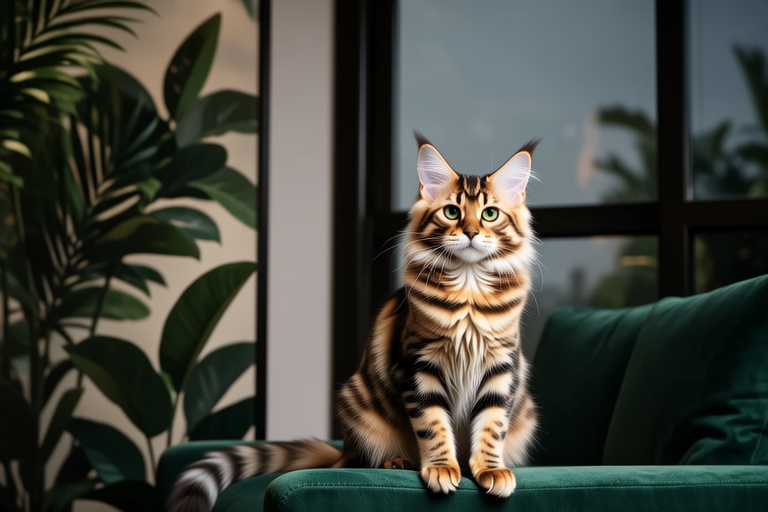
From Jungle to Couch: Transforming Wild at Heart Bengals into Loyal Companions
Bengal cats, with their striking spotted coats and sleek physiques, are one of the most captivating breeds in the world of feline companions. These beautiful animals trace their roots back to the Asian Leopard Cat (ALC), a small wild cat native to the forests of Asia. The first documented breeding of a domestic cat with an ALC occurred in the 1960s, resulting in a breed that combines the elegance of wild cats with the affectionate nature of domesticated ones.
The Bengal’s coat is its most distinctive feature, showcasing large, dark spots set against a background of golden, brown, or silver. This pattern is reminiscent of the leopard’s markings, giving the Bengal its unmistakable wild appearance. However, beneath this striking exterior lies a heart full of curiosity and energy, traits inherited from their wild ancestors.
The Energetic and Curious Nature of Bengal Cats
Bengals are known for their high levels of energy and curiosity. Their playful antics can be traced back to their wild roots, where survival depends on hunting skills and agility. As a result, Bengals are constantly on the move, exploring every nook and cranny of their environment. They are natural climbers and jumpers, often scaling curtains and perching on top of cabinets to survey their domain. Their curiosity extends beyond just physical exploration; they are highly intelligent and enjoy solving puzzles, making them excellent candidates for interactive toys and games.
Taming the Wild Spirit: Challenges and Solutions
While their wild instincts make Bengals exciting and dynamic pets, they also present unique challenges for potential owners. Their high activity levels require ample space for exercise and play, which can be difficult to provide in smaller homes. Additionally, their intelligence means that Bengals need mental stimulation to prevent boredom and destructive behavior. Without proper outlets for their energy and cognitive engagement, Bengals may become restless and mischievous, leading to scratching furniture or knocking over objects.
To address these challenges, it is crucial to provide Bengals with plenty of opportunities for physical and mental stimulation. Interactive play sessions, such as chasing laser pointers or playing with feather wands, can help channel their energy into constructive activities. Puzzle toys that dispense treats or require manipulation to access rewards are also excellent for keeping Bengals engaged and mentally stimulated. Providing vertical spaces, such as cat trees and shelves, allows them to climb and perch, mimicking their natural behaviors.
The Importance of Socialization
Socialization plays a vital role in shaping a Bengal’s temperament and behavior. Early exposure to various stimuli, including different people, environments, and situations, helps Bengals develop into well-rounded and adaptable companions. Proper socialization from a young age ensures that Bengals learn to trust humans and other animals, fostering a bond of loyalty and affection.
Owners should begin socializing their Bengals as kittens, gradually introducing them to new experiences and interactions. Positive reinforcement techniques, such as offering treats and praise for calm and friendly behavior, can encourage Bengals to associate new situations with positive outcomes. Consistent and gentle handling during this critical period will help Bengals become confident and approachable adults.
Success Stories: Bonding with Bengal Cats
Many Bengal owners have successfully transformed their wild spirits into loving pets through dedication and understanding. One owner, Sarah, shared her experience with her Bengal named Luna. “Luna was initially very shy and reserved when we brought her home,” Sarah said. “But with time and patience, she became incredibly affectionate and playful. She loves to cuddle on the couch and play fetch with her favorite toy.”
Another owner, Michael, found that his Bengal, Leo, thrived with interactive play and environmental enrichment. “Leo is always on the move, but providing him with climbing structures and puzzle toys has helped keep him entertained and well-behaved,” Michael explained. “He’s now a loyal companion who enjoys spending time with me and my family.”
These success stories highlight the rewarding experience of bonding with Bengal cats. By meeting their physical and mental needs, Bengals can become loyal and affectionate companions, enriching the lives of their owners.
Conclusion
Bengal cats are a testament to the harmonious blend of wild and domestic characteristics. Their striking appearance and energetic nature make them captivating pets, but they also require careful attention to ensure their well-being. Through proper socialization, interactive play, and environmental enrichment, owners can transform the wild spirit of Bengal cats into loyal and loving companions. The journey of nurturing a Bengal cat into a cherished pet is both challenging and deeply rewarding, offering a unique and enriching experience for those fortunate enough to share their lives with these magnificent creatures.
