Whiskers Across Continents: How the Turkish Angora Captivated the World
The Turkish Angora, a regal feline with a storied past, has enchanted people for centuries. Originating from the highlands of central Turkey, this breed has captivated the world with its elegance, grace, and unique beauty. This article delves into the origins of the Turkish Angora, its historical significance, distinctive physical traits, and the journey that led it to become a beloved breed across continents.
The Origins and Historical Significance of the Turkish Angora
The Turkish Angora can trace its roots back to ancient Turkey, where it has been a part of the landscape for millennia. The breed’s name derives from Ankara, the capital city of modern-day Turkey, which was formerly known as Angora. Historical records suggest that these cats have been cherished in Turkey since at least the 16th century, when they were mentioned in the writings of European travelers. The Turkish Angora was often seen as a symbol of luxury and grace, embodying the refinement of the Ottoman Empire.
The Turkish Angora’s history is deeply intertwined with the culture and traditions of its homeland. In the 17th and 18th centuries, the breed gained international recognition when European traders began importing them to Europe. These cats were highly sought after for their luxurious coats and striking appearance, making them a popular gift among royalty and nobility. Over time, the Turkish Angora became a symbol of wealth and prestige, further cementing its place in history.
Distinctive Physical Traits
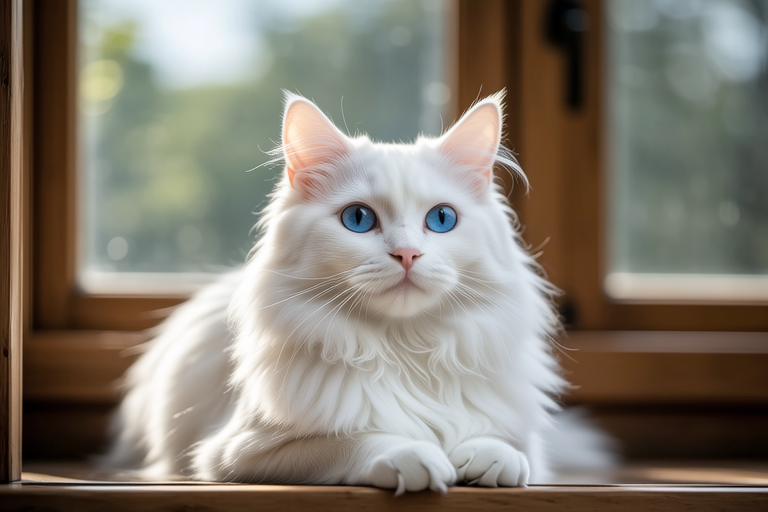
The Turkish Angora is renowned for its distinctive physical traits, which set it apart from other breeds. Perhaps the most notable feature is its silky white coat, which is soft to the touch and shimmering under the light. While white is the most common color, Turkish Angoras can also come in a variety of colors, including black, red, and tabby patterns. Their coats are fine and long, but not as heavy as those of some other long-haired breeds, giving them a sleek and elegant appearance.
Another defining characteristic of the Turkish Angora is its piercing blue eyes. These eyes, often described as mesmerizing, are large and almond-shaped, adding to the breed’s striking appearance. However, it is worth noting that Turkish Angoras can also have one blue eye and one amber or green eye, a condition known as heterochromia. This genetic quirk only adds to the breed’s allure and uniqueness.
Beyond their stunning appearance, Turkish Angoras are also known for their graceful and athletic build. They are medium-sized cats with slender bodies and long legs, which give them a graceful, almost feline-like gait. Their ears are large and pointed, contributing to their alert and curious demeanor. These cats are known for their intelligence and curiosity, often engaging in playful antics and exploring their surroundings with great interest.
The Turkish Angora in Royal Courts
The Turkish Angora’s association with royalty dates back centuries, with the breed being a favorite among European monarchs and nobles. During the 17th and 18th centuries, Turkish Angoras were often gifted as diplomatic presents, further increasing their popularity among the elite. One of the most famous royal patrons of the breed was Queen Victoria of England, who was known for her love of cats and kept several Turkish Angoras at her residence.
In addition to Queen Victoria, many other members of European royalty were fond of the Turkish Angora. For instance, Napoleon Bonaparte, the French emperor, was reportedly a fan of the breed. The Turkish Angora’s presence in royal courts was not just limited to Europe; it also found favor in Asian courts, particularly in Japan, where it was introduced in the early 20th century. The breed’s elegance and grace made it a perfect companion for those of high social standing.
The Spread Across Continents
The Turkish Angora’s journey from its native Turkey to becoming a global phenomenon is a testament to its enduring appeal. The breed’s introduction to the United States occurred in the mid-20th century, when American cat fanciers began importing Turkish Angoras from Europe and Turkey. These imports laid the foundation for the breed’s establishment in North America.
The Cat Fanciers’ Association (CFA) recognized the Turkish Angora as a distinct breed in 1973, marking a significant milestone in the breed’s history. Since then, the Turkish Angora has gained widespread popularity in the United States and Canada, with many breeders dedicated to preserving and promoting the breed. The breed’s presence in the United States has also contributed to its growing popularity in other parts of the world, including Australia, New Zealand, and South Africa.
One of the key figures in the Turkish Angora’s global spread was Elizabeth Terrell, an American breeder who played a pivotal role in establishing the breed in the United States. Terrell’s dedication to breeding high-quality Turkish Angoras helped ensure the breed’s success in the country. Her efforts, along with those of other dedicated breeders, have contributed to the breed’s growing popularity and recognition.
Notable Events and Individuals
The Turkish Angora’s journey to global prominence has been marked by several notable events and individuals. One of the most significant events was the establishment of the CFA in 1906, which played a crucial role in standardizing and promoting various cat breeds, including the Turkish Angora. The CFA’s recognition of the breed in 1973 was a pivotal moment, as it provided the Turkish Angora with a platform to showcase its unique qualities.
In addition to Elizabeth Terrell, other individuals have also played important roles in the breed’s history. Dr. Ilona Schramm, a German veterinarian and breeder, was instrumental in the breed’s development in Europe. Schramm’s work focused on preserving the breed’s unique characteristics and ensuring its health and well-being. Her contributions have left a lasting impact on the Turkish Angora community.
The breed’s popularity has also been influenced by various cat shows and competitions, where Turkish Angoras have consistently won awards and accolades. These events have helped raise awareness of the breed and attract new fans. The Turkish Angora’s presence in media, including books, films, and television shows, has also contributed to its growing popularity.
The Current Status and Enduring Appeal
Today, the Turkish Angora continues to be a beloved breed among cat enthusiasts worldwide. Its unique combination of elegance, intelligence, and playfulness makes it a perfect companion for those seeking a special bond with their pet. The breed’s distinctive appearance and charming personality have ensured its enduring appeal, with many owners describing their Turkish Angoras as loyal and affectionate companions.
Despite its global popularity, the Turkish Angora remains a relatively rare breed compared to more common domestic cats. This rarity, combined with its unique traits, has contributed to its mystique and allure. The breed’s continued success depends on the efforts of dedicated breeders who work tirelessly to preserve and promote the Turkish Angora. Their commitment ensures that future generations will continue to appreciate and admire this magnificent breed.
In conclusion, the Turkish Angora’s journey from its origins in ancient Turkey to becoming a beloved breed across continents is a testament to its enduring appeal. Its distinctive physical traits, historical significance, and captivating personality have ensured its place in the hearts of cat lovers worldwide. As we look to the future, the Turkish Angora’s legacy is secure, and it will undoubtedly continue to captivate and inspire for years to come.
