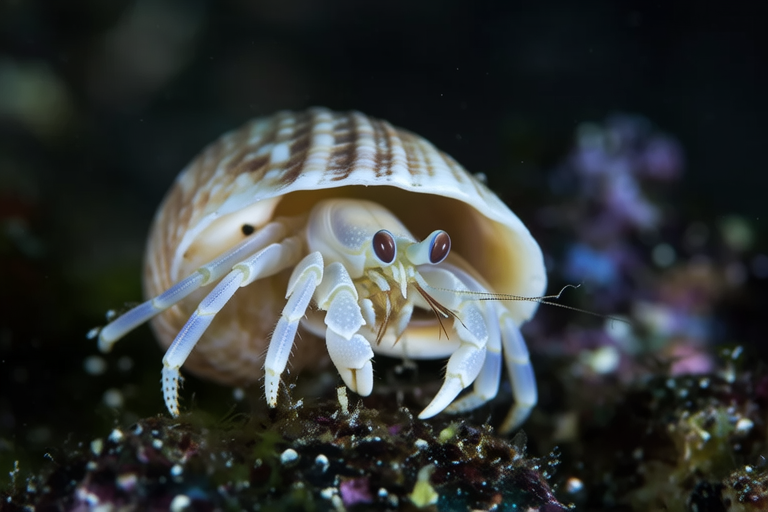
The Fascinating World of Pea Crabs: A Journey Through Their Unique Lifecycle, Habitat, and Symbiotic Relationships
Welcome to the captivating world of pea crabs (Pinnotheridae), tiny crustaceans that have mastered the art of living within the confines of bivalve mollusks. These diminutive creatures have evolved to thrive in an environment that would be inhospitable to most other organisms. This article delves into the unique lifecycle, habitat, and symbiotic relationships of pea crabs, shedding light on their minuscule size, adaptation strategies, and the intricate evolutionary journey that has led them to live inside bivalves.
The Pea Crab’s Lifespan and Reproduction Cycle
The lifespan of pea crabs is relatively short, typically ranging from one to three years, depending on the species and environmental conditions. Their reproductive cycle is synchronized with the lunar phases, ensuring that the timing of mating and egg-laying coincides with high tides. During this period, male pea crabs release pheromones to attract females, who then enter the bivalve host through its gills or mantle cavity. Once inside, the female pea crab lays her eggs, which are attached to her abdomen. The larvae, known as zoeae, hatch and are released into the water column, where they undergo several molts before settling onto a suitable host. This intricate process ensures the continuation of the pea crab population.
Habitat and Adaptation Strategies
Pea crabs are found in coastal waters around the world, inhabiting a variety of bivalve species such as clams, oysters, and scallops. Their preferred habitats include estuaries, mudflats, and sandy shores, where they can find ample food and protection from predators. One of the most remarkable aspects of pea crabs is their ability to adapt to life within the confines of their host. They have developed specialized appendages that allow them to move freely within the bivalve’s shell, while also enabling them to feed on plankton and detritus that enter the host’s gills. Additionally, pea crabs have evolved to secrete mucus that helps to maintain the health of their host, preventing infections and promoting tissue regeneration.
The Symbiotic Relationship Between Pea Crabs and Their Hosts
The relationship between pea crabs and their hosts is mutually beneficial, with both organisms deriving advantages from the partnership. For the pea crabs, the bivalve provides a safe haven, protection from predators, and a steady supply of food. In return, the pea crabs help to clean the bivalve’s gills, removing debris and parasites that could otherwise hinder its respiratory function. Recent studies have shown that pea crabs can also influence the growth and reproduction of their hosts, potentially leading to increased survival rates and improved overall health. This symbiotic relationship highlights the complex interplay between different species in marine ecosystems.
Evolutionary Insights
The evolution of pea crabs to live inside bivalves is a testament to the power of natural selection and adaptation. Over millions of years, these tiny crustaceans have developed a range of physical and behavioral traits that enable them to thrive in their unique environment. One of the most striking features of pea crabs is their small size, which allows them to fit comfortably within the confines of their host’s shell. This miniaturization has been accompanied by a reduction in certain organs, such as the digestive system, which is no longer necessary due to the abundance of food available within the bivalve. Additionally, pea crabs have evolved specialized appendages that allow them to move freely within the host, while also facilitating feeding and reproduction.
Recent Discoveries and Scientific Insights
In recent years, scientists have made significant strides in understanding the biology and behavior of pea crabs. One of the most exciting developments in this field is the discovery of previously unknown species, some of which have been found living within deep-sea bivalves. These new findings have expanded our knowledge of the diversity and distribution of pea crabs, highlighting the importance of continued research in this area. Another area of interest is the potential use of pea crabs as bioindicators of environmental health. Due to their sensitivity to changes in water quality and temperature, pea crabs could serve as valuable tools for monitoring the effects of climate change and pollution on marine ecosystems.
Interesting Facts About Pea Crabs
- Pea crabs are named after their resemblance to peas in both size and shape.
- Despite their small size, pea crabs are capable of growing up to 3 centimeters in length.
- Pea crabs are highly selective when choosing a host, often preferring specific species of bivalves based on factors such as diet and habitat.
- Pea crabs have been found living in deep-sea hydrothermal vents, where they feed on bacteria and other microorganisms.
- The lifespan of pea crabs is relatively short, typically ranging from one to three years.
- Pea crabs are capable of swimming short distances, but they rely on their hosts for transportation over longer distances.
- Pea crabs are known to engage in cannibalism, with larger individuals sometimes preying on smaller ones.
The world of pea crabs is a testament to the incredible diversity of life on Earth and the remarkable ways in which organisms have adapted to survive in challenging environments. By exploring the unique lifecycle, habitat, and symbiotic relationships of pea crabs, we gain a deeper appreciation for the complexity and beauty of marine ecosystems. As researchers continue to uncover new insights into the biology and behavior of these fascinating crustaceans, we are sure to learn even more about the intricate web of life that exists beneath the waves.
