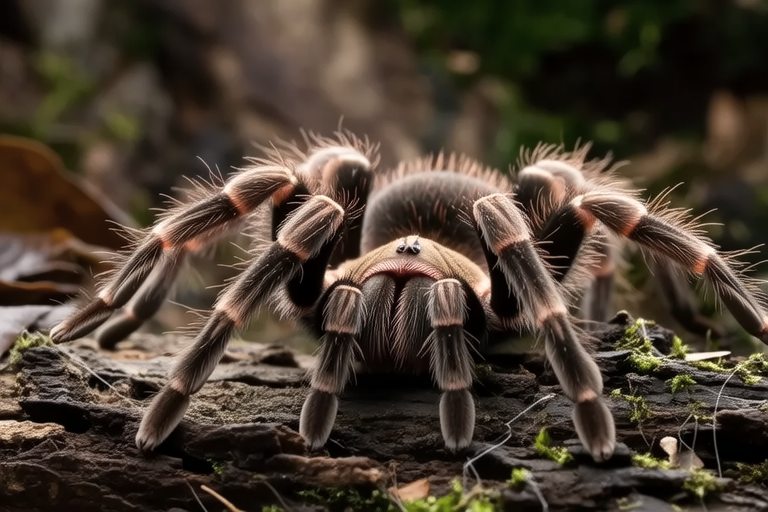
The Coolest Facts About Tarantulas That Will Change Your Perception
Tarantulas, often misunderstood and feared, are some of the most fascinating creatures on Earth. These large, hairy spiders have long been the subject of horror movies and urban legends, but the truth is far more interesting than the myths. This article aims to shed light on the true nature of tarantulas, revealing facts that will change your perception of these incredible arachnids.
Dispelling Common Myths
One of the most common misconceptions about tarantulas is that they are highly venomous and dangerous to humans. While it’s true that they can bite, their venom is generally no more harmful than a bee sting. Another myth is that tarantulas will chase people. In reality, tarantulas are quite shy and prefer to avoid contact with humans. They only bite when provoked or threatened.
Variety in Size
Tarantulas come in a wide range of sizes, from the tiny species found in the rainforests of Southeast Asia to the giant ones like the Goliath birdeater, which can reach up to 30 cm (12 inches) in leg span. The smallest tarantula, the Patu digua, measures just 0.37 inches in length, making it one of the smallest spiders in the world. Despite their intimidating appearance, many tarantulas are quite delicate and fragile.
Unique Defense Mechanisms
Tarantulas have developed several unique defense mechanisms to protect themselves against predators. One of the most notable is the ability to release urticating hairs from their abdomen. These tiny, barbed hairs can cause irritation to the skin and eyes of potential threats. Some tarantulas, like the Chilean rose tarantula, also have vibrant colors that serve as a warning to predators.
Diverse Diets
The diet of tarantulas varies widely depending on their size and environment. Smaller species typically feed on insects, while larger species may prey on small vertebrates like frogs, mice, and even birds. Tarantulas are ambush predators, waiting patiently for their prey to come within striking distance before pouncing. Once caught, they inject venom into their victims to immobilize them, then cover them in digestive enzymes to liquefy their insides for easier consumption.
Habitat Diversity
Tarantulas are incredibly adaptable and can be found in a variety of habitats around the world, including deserts, rainforests, grasslands, and even suburban areas. Some species live in burrows they dig themselves, while others inhabit pre-existing holes or crevices. The Brazilian wandering spider, for instance, is known for its habit of wandering the jungle floor at night in search of food, rather than staying in a fixed location.
Surprising Behaviors
Tarantulas exhibit some truly remarkable behaviors. For example, male tarantulas undergo a dramatic transformation during mating season, developing specialized appendages called pedipalps used for transferring sperm to the female. After mating, the male usually dies shortly thereafter. Females, on the other hand, can live for many years and produce multiple batches of eggs. Some species also engage in a behavior known as “ballooning,” where they release silk threads into the wind and float to new locations.
Role in Ecosystems
Tarantulas play a crucial role in maintaining the balance of their ecosystems. As predators, they help control populations of insects and other small animals, preventing overpopulation and the spread of disease. They also serve as prey for larger animals, contributing to the food chain. Additionally, tarantulas contribute to soil health through their burrowing activities, aerating the ground and promoting nutrient cycling.
Recent Scientific Discoveries
Scientists continue to uncover new information about tarantulas. Recent studies have revealed that certain species of tarantulas possess unique chemical compounds in their venom that could potentially be used to develop new medications for treating pain and neurological disorders. Other research has focused on understanding the social behaviors of tarantulas, with some species exhibiting complex interactions that challenge traditional notions of solitary spiders.
Conclusion: Appreciating Tarantulas
Tarantulas are much more than the scary monsters portrayed in popular culture. They are complex, fascinating creatures with a rich array of adaptations that allow them to thrive in diverse environments. By learning more about these amazing animals, we can gain a deeper appreciation for their role in nature and the intricate web of life on our planet. So next time you encounter a tarantula, take a moment to marvel at its beauty and complexity, and remember that there is always more to learn about the natural world around us.
