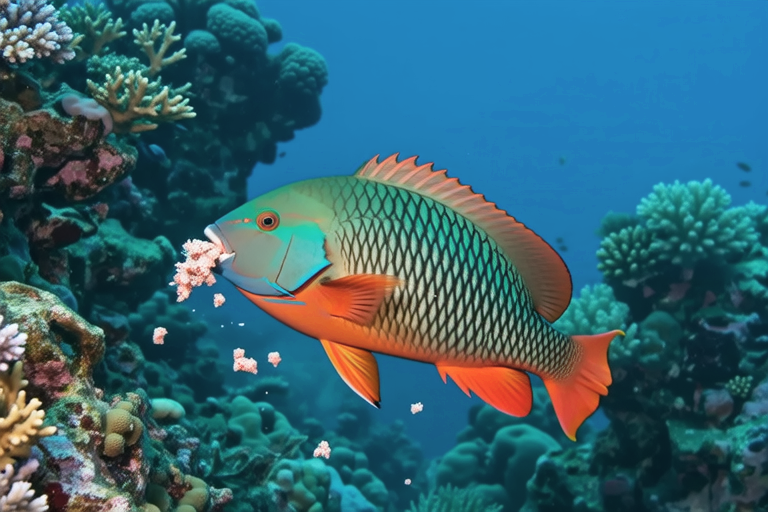
Parrot Fish: The Coral Grazers of the Ocean
Parrot fish are some of the most fascinating creatures in the ocean. Known for their vibrant colors and distinctive beak-like mouths, these fish have unique dietary preferences and feeding behaviors that make them stand out among other marine species. Their consumption of corals and sifting through sand for food not only provides them with sustenance but also plays a crucial role in maintaining the health of marine ecosystems.
Dietary Preferences and Feeding Behaviors
Parrot fish have a varied diet that includes corals, algae, and other small organisms found within the reef. They use their strong jaws and fused teeth, resembling a parrot’s beak, to scrape algae off rocks and coral. This feeding method allows them to access nutrients that would otherwise be inaccessible to many other marine animals. Additionally, parrot fish sift through sand to find tiny organisms like copepods and amphipods, which they filter out from the sediment.
Their preference for corals is particularly noteworthy. Parrot fish consume both soft and hard corals, breaking down the calcium carbonate structures that make up coral skeletons. While this might seem destructive at first glance, it actually serves an important ecological function. By consuming corals, parrot fish help to control the growth of algae, which can otherwise smother coral colonies and hinder their ability to photosynthesize.
Ecological Role of Parrot Fish
The feeding habits of parrot fish have significant implications for the health of coral reefs. By grazing on algae, they prevent it from overgrowing and potentially killing corals. This helps maintain the delicate balance between corals and algae, ensuring that corals have enough space and light to thrive. Moreover, the waste produced by parrot fish after digesting corals contains nutrients that can promote the growth of new corals and other reef organisms.
The diversity of their diet varies depending on the species and habitat. Some parrot fish specialize in particular types of corals or algae, while others have more generalized diets. For example, the stoplight parrotfish (Sparisoma viride) primarily feeds on macroalgae, whereas the blue parrotfish (Scarus coeruleus) prefers to consume coralline algae. Habitat also plays a role; fish living in areas with high coral cover tend to have a greater variety of food sources compared to those in less diverse habitats.
Comparison with Other Marine Species
Other marine species that share similar diets with parrot fish include surgeonfish, rabbitfish, and some species of wrasse. However, there are key differences in their feeding methods and ecological roles. Surgeonfish, for instance, primarily graze on macroalgae rather than corals, making them less directly involved in controlling coral-algal interactions. Wrasse, on the other hand, often act as cleaners, removing parasites from larger fish, which is distinct from the grazing behavior of parrot fish.
One notable similarity between parrot fish and surgeonfish is their importance in maintaining the balance between corals and algae. Both groups contribute significantly to the health of coral reefs by preventing algal blooms that could otherwise harm coral communities. However, the specific mechanisms through which they achieve this differ, reflecting the unique adaptations of each species.
Seasonal Variations and Environmental Factors
Parrot fish exhibit seasonal variations in their feeding patterns, influenced by environmental factors such as water temperature, availability of food, and reproductive cycles. During periods of cooler temperatures, when algae growth slows down, parrot fish may shift their focus towards consuming more corals or switching to alternative food sources like seagrass beds if available nearby. Conversely, during warmer months with increased sunlight, there tends to be higher productivity in terms of algae growth, providing ample opportunities for parrot fish to feed on their preferred diet without having to rely heavily on corals.
In addition to seasonal changes, human activities such as overfishing, pollution, and climate change can affect the availability of suitable habitats for parrot fish. These stressors can lead to shifts in their feeding behaviors or even cause declines in population numbers, thereby impacting the overall health of coral reefs. Conservation efforts aimed at protecting both parrot fish populations and their habitats are essential for preserving the intricate web of life supported by these remarkable creatures.
Scientific Insights
Recent studies have shed light on how the feeding behavior of parrot fish contributes to the overall health of reef ecosystems. Researchers have found that the presence of parrot fish can increase coral cover by reducing competition from algae. Furthermore, the waste produced by these fish acts as a fertilizer for corals, promoting their growth and resilience against environmental stressors.
One interesting aspect of parrot fish feeding behavior is their ability to detect chemical signals released by stressed corals. When corals are under attack by predators or disease, they release compounds that attract parrot fish. These fish then come to consume the corals, effectively acting as “cleaners” of damaged tissue. This mutualistic relationship highlights the complex interactions between different organisms within coral reef ecosystems.
Conclusion
Parrot fish play a vital role in maintaining the health and biodiversity of coral reefs through their unique dietary preferences and feeding behaviors. By consuming corals and sifting through sand for food, they help control algae growth, recycle nutrients, and promote coral regeneration. Understanding the ecological significance of parrot fish and addressing threats to their survival will be crucial for preserving the rich tapestry of marine life that depends on healthy coral reefs.
