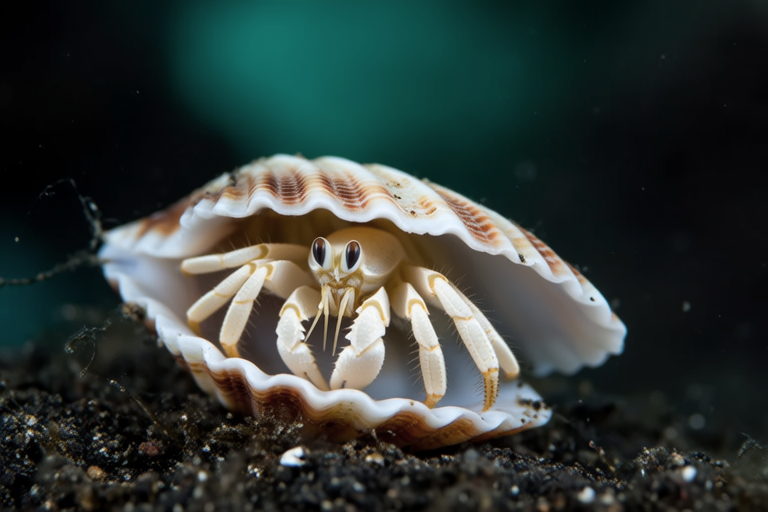
Pea Crabs: The Hidden Heroes of Marine Ecosystems
In the vast ocean, where sunlight fades into deep blue darkness, lives a fascinating group of crustaceans known as pea crabs (Pinnotheridae). These tiny creatures, measuring just a few millimeters to a couple of centimeters, have carved out a unique niche in the marine world by forming symbiotic relationships with various sea creatures. Their existence is a testament to the intricate web of life that thrives beneath the waves. This article delves into the captivating world of pea crabs, exploring their symbiotic relationships, adaptations, and the critical role they play in marine ecosystems.
The Symbiotic Dance: Pea Crabs and Their Hosts
Symbiosis, the close and often long-term interaction between different species, is a cornerstone of marine biology. Pea crabs exemplify this concept through their intimate associations with hosts such as sea cucumbers, bivalves, and echinoderms. These crabs are not merely passengers; they are active participants in a delicate dance that benefits both parties.
Pea crabs are ectoparasites, meaning they live outside but on or within their host’s body. Their hosts include various species of clams, oysters, and even starfish. One of the most remarkable aspects of pea crabs is their ability to choose suitable hosts. Female pea crabs, particularly those of the genus Portunus, release pheromones that attract male crabs. Once paired, the female seeks out a host organism, often a bivalve mollusk. She then uses her sharp claws to pierce the host’s tissue and enter its mantle cavity, where she remains for the rest of her life.
Male pea crabs, on the other hand, are free-living and must find a mate before entering a host. They are smaller than females and more agile, allowing them to move between hosts in search of a partner. Once a male finds a female, he too enters the host, often through the same opening used by the female. This process ensures that the crabs remain together, maximizing reproductive success.
A World Within: Adaptations for Life Inside Others
Living inside another organism presents unique challenges, but pea crabs have evolved remarkable adaptations to thrive in their chosen environments. Their flattened bodies allow them to maneuver easily within tight spaces, and their small size minimizes the impact on their hosts. Pea crabs also possess specialized appendages called maxillipeds, which they use to filter food particles from the water, ensuring they have a steady supply of nutrients without relying solely on their hosts.
One of the most striking adaptations of pea crabs is their ability to synchronize their reproductive cycles with those of their hosts. This synchronization ensures that offspring are released when environmental conditions are most favorable, increasing their chances of survival. Additionally, pea crabs can influence their hosts’ behavior. For example, some pea crab species induce their host to open its shell more frequently, facilitating easier access to food and air.
Benefits and Challenges of Symbiosis
The symbiotic relationship between pea crabs and their hosts is mutually beneficial. For the crabs, the host provides shelter, protection, and a reliable source of food. In return, the crabs offer some benefits to their hosts, although these benefits are not always clear. Some researchers suggest that pea crabs may help clean their hosts by removing parasites or dead tissue. However, the exact nature of these interactions remains a subject of ongoing research.
Despite the advantages, living inside another organism is not without challenges. Hosts can reject or expel unwanted guests, and pea crabs must be vigilant to avoid detection. To mitigate this risk, pea crabs have developed strategies to blend in with their hosts. Some species have transparent shells that match the color of their hosts, making them nearly invisible. Others secrete mucus that mimics the chemical composition of their hosts, further reducing the likelihood of rejection.
Pea Crabs in Marine Ecosystems
Pea crabs play a crucial role in marine ecosystems, contributing to biodiversity and nutrient cycling. As part of their symbiotic relationships, pea crabs can influence the health and behavior of their hosts, indirectly affecting the broader ecosystem. For instance, by inducing their hosts to open more frequently, pea crabs increase the flow of water through the host’s body, potentially enhancing oxygen exchange and filtration efficiency.
Recent studies have shed light on the complex interactions between pea crabs and their hosts. Researchers have found that certain species of pea crabs can alter the reproductive success of their hosts. In some cases, the presence of pea crabs can lead to increased egg production, while in others, it may result in reduced fertility. Understanding these dynamics is essential for comprehending the full scope of pea crabs’ impact on marine ecosystems.
Recent Discoveries and Future Research
The study of pea crabs continues to yield exciting discoveries. Recent research has focused on understanding the genetic basis of their symbiotic relationships. Scientists are exploring whether pea crabs and their hosts share similar genes that facilitate their interactions. Additionally, there is growing interest in the potential applications of pea crab symbiosis in biotechnology and medicine.
One area of particular interest is the development of bioactive compounds derived from pea crabs. These compounds could have antimicrobial properties, offering new avenues for treating infections. Another promising application is the use of pea crab-inspired materials in medical devices, such as implants that reduce the risk of rejection.
Conclusion: Celebrating the Tiny Giants
Pea crabs are a marvel of evolution, showcasing the ingenuity and adaptability of life in the ocean. Their symbiotic relationships, unique adaptations, and vital role in marine ecosystems make them a fascinating subject of study. While much remains to be discovered about these tiny creatures, one thing is certain: pea crabs are integral to the health and balance of our oceans.
As we continue to explore the mysteries of the deep, let us not forget the hidden heroes that thrive within the shadows of their hosts. By celebrating the beauty and complexity of pea crabs, we gain a deeper appreciation for the interconnectedness of all life on Earth.
