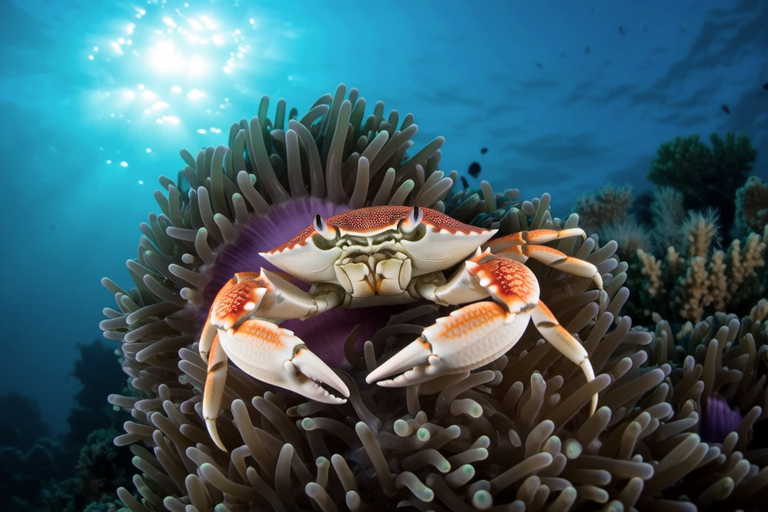
The Unique Lifestyle of Pea Crabs: Symbiosis Inside Hermit Crabs’ Shells
Pea crabs (Pinnotheres spp.) are tiny crustaceans that have developed a fascinating lifestyle by living inside the shells of hermit crabs. This unusual arrangement has been the subject of scientific curiosity for many years. Their symbiotic relationship with hermit crabs not only offers protection but also presents a series of challenges. Let’s explore the unique world of pea crabs, delving into their physical characteristics, behavior, reproduction methods, and their role in marine ecosystems.
Physical Characteristics
Pea crabs are named for their small size, which can range from just a few millimeters to about 2 centimeters in length. They possess soft bodies covered by a thin, delicate carapace that lacks the typical hard exoskeleton found in most crabs. This adaptation allows them to fit snugly inside the narrow confines of hermit crab shells without causing discomfort to their hosts. Their long, slender legs enable them to navigate the intricate interior spaces of these protective homes. The pea crab’s coloration often matches that of its host, providing an additional layer of camouflage against potential predators.
Symbiotic Relationship with Hermit Crabs
The symbiotic relationship between pea crabs and hermit crabs is mutually beneficial. While hermit crabs provide a safe refuge for pea crabs, the latter offer a service in return. Pea crabs feed on the mucus secreted by hermit crabs, which helps to keep the inside of the shell clean. Additionally, pea crabs consume parasites that might otherwise harm the hermit crab. This partnership demonstrates the complexity of marine ecosystems, where different species work together to enhance survival chances.
Behavior
Pea crabs exhibit a variety of behaviors that are tailored to their unique living situation. They are generally passive creatures, spending much of their time resting inside the hermit crab’s shell. However, when the hermit crab moves, the pea crab will move along with it, clinging tightly to avoid being left behind. This constant movement exposes the pea crab to different environments, allowing it to find food and mates more easily than if it were stationary. During mating season, male pea crabs compete for access to female counterparts, engaging in elaborate courtship rituals that involve waving their claws in front of potential partners.
Reproduction Methods
Pea crabs reproduce through external fertilization. Males release sperm into the water, where it meets eggs released by females. Once fertilized, the eggs attach themselves to the female’s abdomen until they hatch. After hatching, larvae float freely in the ocean before settling onto suitable substrates and eventually finding a hermit crab host. This reproductive strategy ensures genetic diversity within populations and increases the likelihood of successful colonization of new habitats.
Adaptations to Protected Yet Challenging Existence
Living inside a hermit crab’s shell presents both advantages and challenges for pea crabs. On one hand, they enjoy protection from larger predators and harsh environmental conditions. On the other hand, space limitations require them to be highly efficient in utilizing resources. Pea crabs have adapted by developing specialized feeding appendages that allow them to extract nutrients from limited sources within the shell. Furthermore, their ability to synchronize movements with those of their host minimizes energy expenditure while maximizing exposure to potential food sources.
Role in Marine Ecosystems
Pea crabs play an important role in marine ecosystems as part of the food web. As consumers of organic matter and parasites, they help maintain balance among various species. Their presence can influence the health of hermit crab populations by reducing parasitic loads and improving overall fitness. Moreover, pea crabs contribute to nutrient cycling processes by breaking down organic materials and redistributing them throughout aquatic environments.
Recent Scientific Discoveries
Scientists continue to uncover new information about pea crab biology and behavior. Recent studies have revealed that certain species of pea crabs may exhibit preferences for specific types of hermit crab hosts based on factors such as shell shape or availability of food resources. Another area of interest involves understanding how climate change affects pea crab distributions and interactions with their hosts. Researchers are also exploring ways to use pea crabs as bioindicators for assessing ecosystem health, given their sensitivity to environmental changes.
Conclusion
The unique lifestyle of pea crabs exemplifies the intricate relationships that exist within marine ecosystems. By living symbiotically with hermit crabs, pea crabs have evolved remarkable adaptations that allow them to thrive despite spatial constraints. Their contributions to ecosystem function highlight the importance of studying lesser-known organisms for gaining a comprehensive understanding of biodiversity. As we continue to learn more about these fascinating creatures, we gain valuable insights into the complexities of life under the sea.
