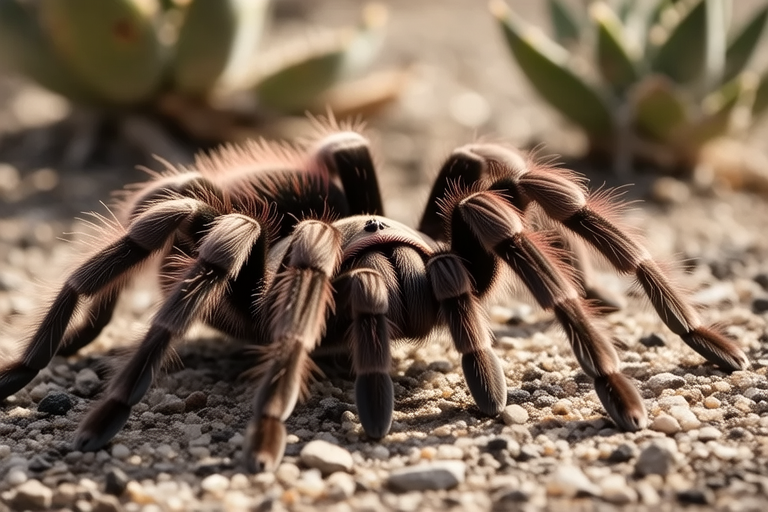
Meet Your New Furry Friend: A Beginner’s Guide to Chilean Rose Tarantulas
Welcome to your journey into the fascinating world of tarantulas! If you’re considering a pet that is both intriguing and relatively low-maintenance, the Chilean rose tarantula might just be the perfect choice for you. This guide will provide you with everything you need to know to successfully welcome a Chilean rose tarantula into your home.
Introduction: Why Choose a Chilean Rose Tarantula?
The Chilean rose tarantula, also known as Grammostola rosea, is one of the most popular species among tarantula enthusiasts. Native to the deserts of Chile, this tarantula has gained its reputation as a docile and hardy pet, making it ideal for beginners. Its unique pinkish hue, which can range from light to dark depending on the individual, adds to its appeal. These spiders are known for their calm demeanor and are less likely to bite compared to other tarantula species.
Chilean rose tarantulas are nocturnal creatures, meaning they are most active during the night. They are also quite small, typically reaching lengths of around 4-6 inches, making them easy to accommodate in a home environment. Their popularity stems from their ease of care, affordability, and the fact that they don’t require extensive space or specialized equipment.
Care Requirements
Habitat Setup
Setting up the right habitat is crucial for the health and well-being of your Chilean rose tarantula. Start by selecting an appropriate enclosure. A glass terrarium or a plastic container with adequate ventilation is recommended. The enclosure should be at least three times the length of the spider’s body to allow for proper movement and molting.
The substrate for the enclosure should mimic the arid environment of the Chilean desert. Use a mix of sand and coconut fiber or vermiculite, ensuring that it is deep enough for burrowing. Avoid using cedar or pine shavings, as these can be harmful to your pet.
Temperature and Humidity Needs
Maintaining the correct temperature and humidity levels is vital for your tarantula’s health. The optimal temperature range for a Chilean rose tarantula is between 75°F to 85°F (24°C to 29°C). You can achieve this by using a heat mat placed under one side of the enclosure to create a temperature gradient. Always ensure that there is a cooler area available for your tarantula to retreat to if needed.
The humidity level should be kept between 40% and 60%. This can be achieved by misting the enclosure occasionally and ensuring that there is always a water dish available. However, avoid over-misting, as excessive moisture can lead to respiratory issues and fungal growth.
