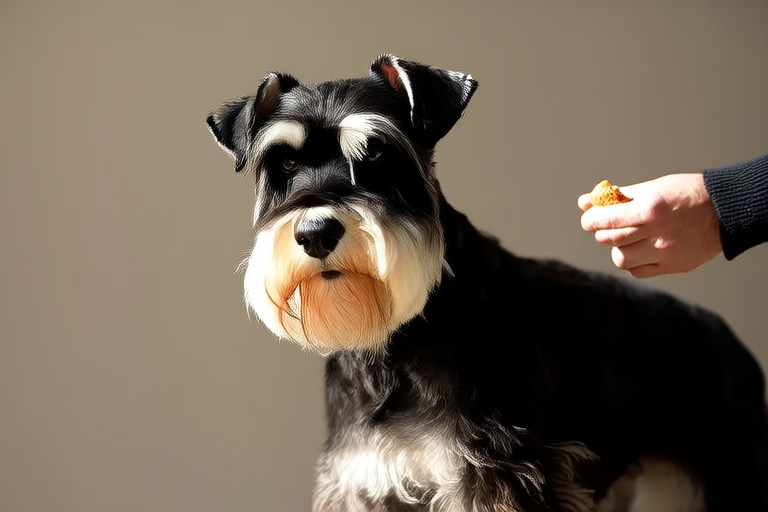
Training Tips for Raising an Obeying Schnauzer: Tricks Every Owner Needs
Introduction
Welcome to the world of schnauzers! These charming, energetic, and intelligent dogs are beloved by many. However, their high energy levels and independent nature mean that training them requires patience, consistency, and the right approach. This article will guide you through the essential steps to raise an obedient schnauzer, from basic obedience training to mental stimulation activities.
Basic Obedience Training
The foundation of any successful training program lies in basic obedience commands. Start with simple commands like “sit,” “stay,” “come,” and “down.” Use treats as rewards and praise to reinforce good behavior. Consistency is key; always use the same command word for each action to avoid confusion.
Real-life example: Sarah, a first-time schnauzer owner, noticed her dog’s excitement during walks often led to pulling on the leash. By teaching “heel” and practicing it daily, Sarah successfully reduced her schnauzer’s pulling behavior.
Socialization Techniques
Schnauzers thrive when properly socialized. Expose your puppy to various environments, people, and other animals from an early age. This helps prevent fear-based aggression or anxiety in the future. Puppy classes are excellent for controlled socialization, where your schnauzer can interact with other puppies and learn appropriate play behavior.
Tip: Introduce new experiences gradually and ensure they are positive ones. For instance, if your schnauzer is scared of loud noises, start by playing recordings at low volumes and reward calm behavior.
Common Challenges and Solutions Specific to Schnauzers
Despite their intelligence, schnauzers can be stubborn and strong-willed. They may resist commands or become overly protective. Address these issues early by setting clear boundaries and maintaining consistency in your training.
- Stubbornness: Break down complex tasks into smaller, manageable steps. Praise and reward each step until the full command is completed.
- Overprotectiveness: Teach “leave it” and “drop it” commands. Practice these in different scenarios to ensure your schnauzer understands the importance of following them.
Example: Mark, a schnauzer owner, faced difficulties with his dog’s possessiveness over toys. By consistently using the “leave it” command and rewarding non-possessive behavior, Mark successfully reduced his schnauzer’s guarding tendencies.
Positive Reinforcement Methods
Positive reinforcement is crucial for building a strong bond with your schnauzer and encouraging desirable behaviors. Use treats, praise, and petting to reward good actions. Avoid punishment-based methods, as they can lead to fear or aggression.
Tips for effective positive reinforcement:
- Timing is everything – reward immediately after the desired behavior.
- Vary rewards to keep training sessions interesting.
- Be patient and consistent.
Exercise Needs
Schnauzers require regular physical activity to stay healthy and happy. Daily walks, runs, or playtime in a secure area are necessary. Mental stimulation also plays a vital role in keeping your schnauzer engaged and preventing boredom-related behaviors.
Real-life scenario: John, a schnauzer owner, found his dog destructive when left alone for long periods. After increasing daily walks and incorporating interactive toys, John noticed significant improvements in his schnauzer’s behavior.
Mental Stimulation Activities
To keep your schnauzer mentally sharp, provide puzzle toys, food-dispensing toys, and obedience training sessions. Rotate toys regularly to maintain interest and challenge your schnauzer’s mind.
Examples of mental stimulation activities:
- Interactive feeding toys that dispense treats as your schnauzer plays with them.
- Teaching new tricks or commands.
- Hiding treats around the house for your schnauzer to find.
Consistency in Training
Consistency is perhaps the most important aspect of training your schnauzer. All family members must follow the same rules and commands. Establish a routine for feeding, walking, and playtime. This predictability helps your schnauzer understand what is expected of them.
Tip: Keep training sessions short but frequent, especially for young puppies. Ten minutes of focused training several times a day is more effective than one long session.
Conclusion
Raising an obedient schnauzer requires dedication, patience, and the right approach. By following the tips outlined in this article, you’ll be well on your way to having a well-behaved, happy companion. Remember, every schnauzer is unique, so adapt these strategies to suit your individual dog’s needs. With time and effort, you’ll build a strong bond based on trust and mutual respect.
