The Arowana’s Splendor: Unveiling the Mystique Behind This Exotic Fish
The arowana, a name that resonates with mystery and allure, stands out among aquatic creatures with its distinctive appearance and rich cultural history. Known scientifically as Osteoglossum bicirrhosum, this fish has captivated the hearts of many due to its unique physical attributes and historical significance. This article delves into the splendor of the arowana, exploring its remarkable features, cultural myths, habitat, dietary habits, and the challenges faced in maintaining these majestic creatures in captivity.
Distinctive Physical Attributes
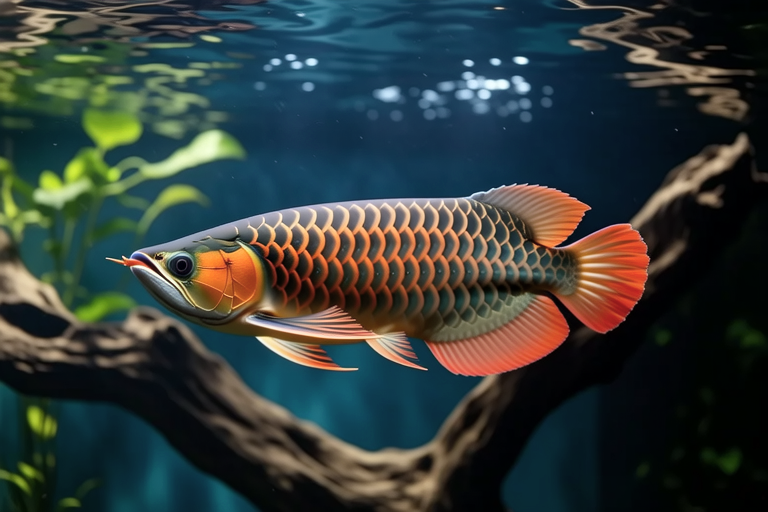
At first glance, the arowana’s appearance is strikingly different from most fish species. It boasts a sleek, elongated body, typically measuring up to three feet in length, adorned with shimmering scales that catch light like mirrors. The arowana’s eyes are large and expressive, giving it a keen awareness of its surroundings. One of its most notable features is the presence of two barbels near its mouth, which are believed to aid in detecting prey and navigating murky waters. These barbels are thought to be remnants of a more primitive evolutionary stage, adding an ancient charm to the arowana’s visage.
Another defining characteristic of the arowana is its ability to leap out of the water, a behavior known as “breaching.” This trait has earned it the nickname “dragonfish” in some parts of the world, alluding to its resemblance to mythical dragons. Breaching allows the arowana to catch flying insects and small birds, showcasing its agility and adaptability in the wild. Its strong jaw muscles enable it to snap up prey with remarkable speed, making it a formidable predator.
Historical Significance and Cultural Myths
The arowana’s presence in human culture dates back centuries, particularly in Asian countries such as Malaysia, Indonesia, and Singapore. In these regions, the arowana is revered as a symbol of good fortune and prosperity. Legends tell of arowanas being guardians of hidden treasures, their scales reflecting the shimmering gold of untold riches. These stories have contributed to the fish’s reputation as a bringer of wealth and success.
In Chinese culture, the arowana is associated with the dragon, a powerful symbol of strength and nobility. The fish’s ability to leap out of the water is seen as a manifestation of its dragon-like qualities, further enhancing its mystique. Some believe that owning an arowana brings protection and good luck, leading to its popularity as a prized aquarium fish among collectors and enthusiasts.
Habitat and Dietary Habits
Naturally, arowanas inhabit slow-moving rivers, swamps, and floodplains, primarily in Southeast Asia. They prefer environments with dense vegetation and abundant hiding spots, where they can ambush prey and avoid predators. These habitats provide the ideal conditions for their unique hunting techniques, which involve darting through the water with lightning-fast speed.
Arowanas are carnivorous, feeding on a diet that consists mainly of smaller fish, insects, and crustaceans. Their preference for live prey makes them efficient hunters, capable of catching fast-moving targets with precision. In captivity, it is essential to replicate their natural diet as closely as possible to ensure their health and well-being. Feeding a variety of high-quality fish food, supplemented with occasional treats of live or frozen foods, can help maintain their vitality.
Tips for Aquarium Owners
For those interested in keeping arowanas, understanding their specific needs is crucial for their long-term health and happiness. A well-planned tank setup is essential, starting with a spacious aquarium that provides ample room for the fish to swim and maneuver. A minimum tank size of 180 gallons is recommended for a single adult arowana, with additional space required for each additional fish.
Water conditions must be carefully monitored to mimic the arowana’s natural environment. Maintaining a temperature range between 78-84°F and a pH level between 6.5-7.5 is ideal. Regular water changes and the use of appropriate filtration systems are necessary to keep the water clean and free of harmful toxins. Additionally, providing adequate lighting and ensuring a stable water flow can enhance the arowana’s comfort and stimulate its natural behaviors.
When selecting tankmates for your arowana, it is important to consider compatibility. Due to their predatory nature, arowanas should be housed alone or with similarly-sized, non-aggressive species. Suitable tankmates include large catfish, peaceful cichlids, and other robust fish that can defend themselves against potential attacks. Avoid housing arowanas with smaller or slower-moving fish, as they may become prey.
Conservation Efforts and Responsible Ownership
The arowana’s popularity as an aquarium fish has led to overexploitation in the wild, prompting conservation efforts to protect this magnificent species. Many countries have implemented regulations to control the trade of arowanas, limiting the number of fish that can be taken from the wild and promoting sustainable breeding practices.
Responsible ownership plays a vital role in ensuring the survival of arowanas. By purchasing only captive-bred specimens and supporting reputable breeders, aquarium enthusiasts can contribute to the conservation of this species. Additionally, educating oneself about the proper care and maintenance of arowanas can help prevent unnecessary stress and illness, ultimately contributing to their longevity.
As we continue to admire and appreciate the arowana’s splendor, it is our responsibility to ensure that future generations can also experience the wonder of this extraordinary fish. Through conservation efforts and responsible ownership, we can safeguard the arowana’s place in the world, preserving its beauty and mystique for years to come.
