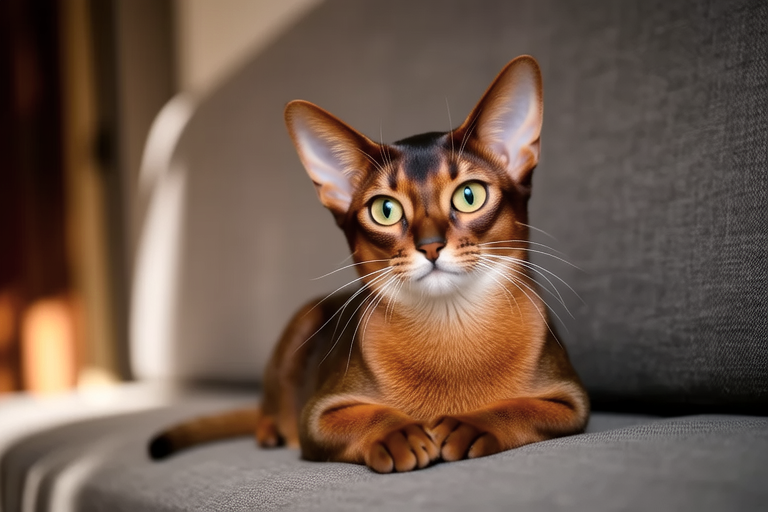
Abyssinian Cats: A Unique Breed with Enigmatic Charm
The Abyssinian cat is one of the most captivating and distinctive breeds in the feline world. With a history that stretches back centuries, these elegant creatures have intrigued cat enthusiasts for generations. Their striking appearance, coupled with their playful and intelligent nature, sets them apart from other breeds. In this article, we will explore the unique characteristics and behaviors of Abyssinian cats, delving into their origins, physical traits, and distinctive personalities.
Origins and Historical Background
The Abyssinian cat’s origins are steeped in mystery, but it is widely believed that they hail from the African continent. The name “Abyssinian” refers to Abyssinia, which was the former name for Ethiopia. However, there is some debate about whether these cats truly originated in Ethiopia or if they were brought there by British soldiers after the Abyssinian War in the mid-19th century. One of the first recorded Abyssinians in Britain was a cat named Zula, who was brought back by Captain Barrett-Lennard after the war.
Genetic studies have shed light on the Abyssinian’s ancestry. It is thought that these cats share common ancestors with the Asian wildcat and the domestic cats of Southeast Asia. This suggests that Abyssinians may have been introduced to Africa through trade routes between the Middle East and Asia. Despite their name, Abyssinians are not native to Ethiopia, but rather they have been bred extensively in Europe and North America since the late 1800s.
Physical Traits
Abyssinians are known for their sleek, muscular bodies and long legs. They have a wedge-shaped head with large, pointed ears and expressive almond-shaped eyes that can be green, gold, or hazel. Their coat is short, dense, and has a unique texture that feels soft yet coarse at the same time. Abyssinians come in several color variations, including ruddy (the most common), blue, fawn, and cinnamon. Each hair shaft has bands of color, creating a ‘ticked’ effect that gives them a wild and exotic appearance.
Their coat patterns are also distinctive. Each hair is banded with three colors: a dark base color, a middle band of lighter color, and a tip of even lighter color. This ticking pattern is caused by a recessive gene, and it gives the Abyssinian its characteristic look. The ticking pattern also helps the cat blend into its environment, making it easier for them to hunt and survive in the wild.
Distinctive Personalities
Abyssinians are known for their high energy levels and love of play. They are curious, adventurous, and enjoy exploring their surroundings. These cats are highly intelligent and can be trained to perform tricks, fetch toys, and even walk on a leash. Their intelligence makes them excellent problem solvers, and they often figure out how to open cabinets or get into restricted areas. Abyssinians are also known for their vocalizations, often chirping, chattering, or meowing to communicate with their owners.
Despite their independent nature, Abyssinians are affectionate and enjoy being around people. They form strong bonds with their owners and can be very loyal companions. They are not lap cats, preferring to sit nearby rather than cuddle up, but they still crave attention and interaction. Abyssinians are also known for their playful nature, often engaging in games of fetch or chasing after toys. They are particularly fond of water and may enjoy playing with dripping faucets or splashing in shallow pools.
Interaction with Humans
Abyssinians are social animals that thrive on human interaction. They are not content to be left alone for long periods and may become anxious or depressed if they do not receive enough attention. They are highly adaptable and can adjust to different living situations, but they do best in households where they are part of an active family. Abyssinians are also known for their ability to form strong bonds with multiple family members, and they often become attached to specific individuals within the household.
Due to their intelligence and curiosity, Abyssinians can be quite mischievous. They may find ways to get into trouble, such as knocking over objects or opening drawers. However, their playful nature and love of attention make them great companions for families with children. They are gentle and patient with children, but they still require supervision to ensure that both the child and the cat remain safe. Abyssinians are also known to get along well with other pets, especially if they are introduced to them early in life.
Care Requirements
Abyssinians are relatively low-maintenance when it comes to grooming. Their short, dense coats do not require extensive brushing, but they still benefit from regular grooming sessions to remove loose hairs and distribute skin oils. Weekly brushing with a soft brush or comb is usually sufficient. Bathing is rarely necessary unless the cat gets into something particularly messy. Abyssinians are generally healthy cats, but they can be prone to certain health issues, so it is important to provide them with proper nutrition and veterinary care.
Like all cats, Abyssinians need access to clean water and a balanced diet. They should be fed a high-quality commercial cat food that meets their nutritional needs. Fresh water should be available at all times. Regular veterinary check-ups are essential to monitor their health and catch any potential problems early. Abyssinians are also known for their high activity levels, so they require plenty of opportunities for exercise and play. Providing them with interactive toys, climbing structures, and scratching posts can help keep them physically and mentally stimulated.
Common Health Issues
Abyssinians are generally healthy cats, but they can be prone to certain health conditions. One of the most common issues is dental disease, which can lead to tooth decay, gum infections, and other complications. Regular dental care, including brushing and professional cleanings, can help prevent these problems. Abyssinians are also susceptible to certain genetic disorders, such as renal amyloidosis, a condition that affects the kidneys and can lead to kidney failure. Other health concerns include hypertrophic cardiomyopathy, a heart condition that can cause heart failure, and progressive retinal atrophy, an eye disorder that can lead to blindness.
Regular veterinary check-ups and genetic testing can help identify and manage these conditions. Early intervention and proper care can significantly improve the quality of life for affected cats. It is also important to note that not all Abyssinians will develop these health issues, and many live long, healthy lives without any major problems. Proper nutrition, regular exercise, and routine veterinary care can help minimize the risk of these conditions and ensure that your Abyssinian remains healthy and happy.
Anecdotes and Studies
Abyssinians have captivated cat enthusiasts for generations, and their enigmatic charm has been the subject of many anecdotes and studies. One famous story involves an Abyssinian named Bongo, who lived in England during World War II. Bongo was known for his ability to predict air raids and would run to the basement to hide whenever he sensed danger. His owner, a nurse, would follow him down to the basement, and they survived several bombings together.
Another study, conducted by researchers at the University of California, Davis, found that Abyssinians are one of the most intelligent cat breeds. The study involved training cats to perform various tasks, such as navigating mazes or retrieving objects. Abyssinians consistently performed better than other breeds, demonstrating their problem-solving abilities and quick learning skills. These findings support the anecdotal evidence of Abyssinians’ intelligence and adaptability.
Conclusion
Abyssinian cats are a unique and fascinating breed with a rich history and distinctive characteristics. Their origins, physical traits, and personalities set them apart from other cat breeds, making them a favorite among cat enthusiasts. Their intelligence, playfulness, and affectionate nature make them wonderful companions for families and individuals alike. While they require proper care and attention, their charm and loyalty make them worth the effort. Whether you are a seasoned cat owner or new to the world of felines, an Abyssinian is sure to captivate and enchant you with their enigmatic charm.
