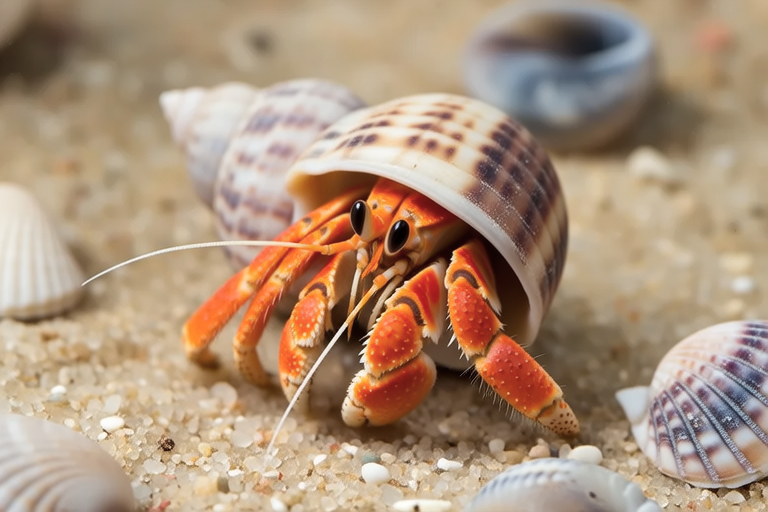
Shell Swap Shenanigans: Inside the Secret Life of Hermit Crabs
Welcome to the vibrant and often overlooked world of hermit crabs! These fascinating creatures have captured the imagination of many with their peculiar lifestyle, especially their unique habit of exchanging shells. In this article, we will dive into the secret life of hermit crabs, exploring the strategic nature of their shell swaps, the challenges they face, and the social dynamics involved. We’ll also uncover interesting facts about their habitats, preferences for different shells, and how environmental changes impact their shell selection process.
The Shell Game: An Overview
Hermit crabs are known for their distinctive habit of carrying around discarded snail shells for protection. This behavior is not just about finding a cozy home; it’s a complex game of survival that involves careful consideration and strategic planning. The shell swap is more than just a routine change of residence; it’s a critical part of the hermit crab’s life cycle.
Each hermit crab carefully selects its next shell based on several factors, including size, shape, and availability. They are constantly on the lookout for a new home that fits their growing bodies perfectly. When a suitable shell becomes available, the crab will quickly move in, often engaging in fierce competition with other crabs for the prize. This competition can lead to some amusing and sometimes aggressive interactions, which are a delight to observe.
The Strategic Nature of Shell Swaps
The shell exchange process is a highly strategic affair. Hermit crabs have evolved to be very particular about their choice of shell, as it directly impacts their survival. A poorly chosen shell can leave them vulnerable to predators or environmental hazards. Therefore, selecting the right shell is crucial for their continued existence.
Recent studies have shown that hermit crabs exhibit a remarkable level of intelligence when it comes to choosing their shells. They are able to assess the structural integrity of a shell and even gauge its suitability by tapping on it. This behavior suggests a level of awareness and decision-making that goes beyond simple instinct. For instance, researchers at the University of California, Berkeley, have found that hermit crabs are capable of assessing the durability of a shell by listening to the sound it makes when tapped.
The Challenges of Shell Hunting
Despite their best efforts, hermit crabs often face numerous challenges in finding the perfect shell. One of the biggest obstacles is the limited availability of suitable shells. As more and more crabs grow and outgrow their current shells, the competition for new ones intensifies. Additionally, environmental changes such as pollution, climate change, and habitat destruction can further reduce the number of available shells.
Hermit crabs are particularly sensitive to their environment, and any disruption can have serious consequences for their shell-hunting activities. For example, increased water temperatures due to global warming can cause coral reefs to bleach, leading to a decline in the number of available shells. This not only affects the hermit crabs but also disrupts the entire ecosystem.
Social Dynamics in Shell Swapping
The shell swapping process is not just an individual endeavor; it is also a social activity that involves complex interactions between crabs. Hermit crabs are known to form tight-knit communities, where they work together to find and share resources. During a shell swap, crabs may engage in cooperative behaviors, such as helping each other find new homes or even sharing shells when necessary.
Observations have shown that hermit crabs often gather in large groups to participate in shell exchanges. These gatherings can be quite chaotic, with crabs jostling for position and sometimes even forming long chains as they pass shells from one to another. While these events can be exciting to watch, they also highlight the intricate social structure of hermit crab communities.
Habitats and Preferences
Hermit crabs are found in a wide range of habitats, from tropical beaches to rocky shores and even freshwater environments. Each type of habitat offers unique challenges and opportunities for shell hunting. For example, hermit crabs living in tropical areas have access to a greater variety of shells, while those in colder regions may have fewer options.
Interestingly, hermit crabs have distinct preferences when it comes to the types of shells they choose. Some species prefer spiral-shaped shells, while others opt for more conical shapes. These preferences are thought to be influenced by factors such as ease of entry and exit, as well as the ability to hide effectively from predators. Recent research has suggested that hermit crabs may also consider the color and texture of a shell when making their final decision.
The Impact of Environmental Changes
Environmental changes, such as rising sea levels and increased ocean acidity, are having a profound impact on hermit crab populations and their shell selection process. These changes can alter the availability and quality of shells, forcing crabs to adapt their strategies. For instance, some hermit crabs have been observed using non-traditional materials, such as bottle caps or plastic debris, as substitutes for natural shells.
This adaptation raises important questions about the long-term sustainability of hermit crab populations and the broader implications for marine ecosystems. Scientists are currently studying how these changes might affect hermit crab behavior and whether they could lead to significant shifts in their evolutionary trajectory.
Conclusion
The shell swap shenanigans of hermit crabs offer a fascinating glimpse into the complex lives of these remarkable creatures. From their strategic approach to shell selection to the challenges they face and the social dynamics involved, hermit crabs demonstrate a level of intelligence and adaptability that is truly impressive. As we continue to learn more about these creatures, it becomes increasingly clear that their unique lifestyle is a testament to the wonders of evolution and the importance of preserving our oceans.
By understanding the intricacies of hermit crab behavior, we can better appreciate the delicate balance of marine ecosystems and the role that each species plays within them. Let us continue to support conservation efforts and strive to protect the diverse and beautiful world beneath the waves.
