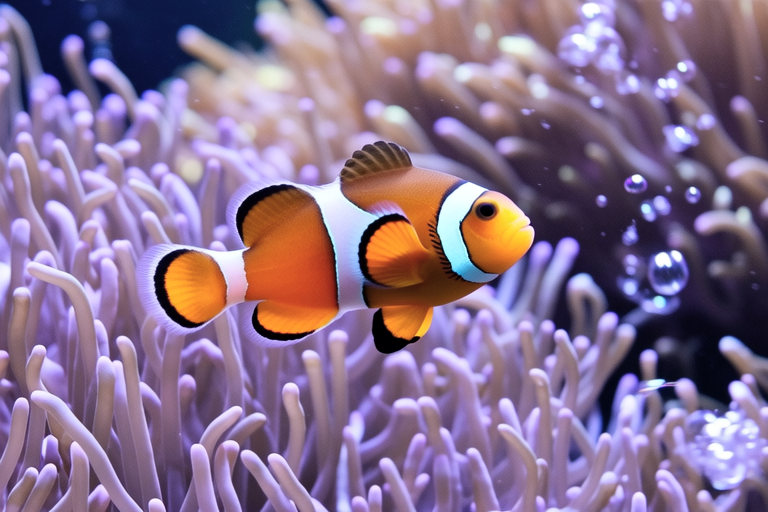
The Journey from Nemo to Real Life Clownfish
From the moment Finding Nemo was released in 2003, audiences were captivated by the story of a young clownfish named Nemo and his adventurous journey back to his father Marlin. This animated tale brought the vibrant world of coral reefs and their inhabitants into the hearts of millions. However, beyond the enchanting storyline lies a wealth of knowledge about the real-life clownfish (Amphiprioninae) and their complex lives in the ocean. Let’s embark on a journey from the fictional Nemo to understanding the remarkable reality of clownfish.
Natural Habitat: The Coral Reefs
Clownfish are native to the tropical and subtropical waters of the Indian and Pacific Oceans, where they live among the tentacles of various species of sea anemones. These anemones are found in shallow waters, typically no deeper than 15 meters, and are most abundant in areas with strong currents that bring in a steady supply of food. Clownfish are particularly prevalent in the Great Barrier Reef off the coast of Australia, the Maldives, and the Red Sea.
Coral reefs provide clownfish with shelter, protection, and a rich source of food. They are home to a diverse array of marine life, including numerous species of fish, crustaceans, and mollusks. The intricate structure of coral reefs offers countless hiding spots, making them ideal for small fish like clownfish to evade predators.
Behavioral Patterns and Unique Characteristics
Clownfish are known for their bright orange coloration, white stripes, and black or maroon fins. Their distinctive appearance serves as a warning to potential predators, indicating that they are unpalatable due to their symbiotic relationship with sea anemones. This relationship is mutually beneficial, as the clownfish provides nutrients to the anemone through its waste, while the anemone protects the clownfish from predators.
Clownfish are also territorial and highly social creatures. They live in groups within a single anemone, with a dominant breeding pair at the top of the hierarchy. The rest of the group consists of non-breeding males and juveniles. When the dominant female dies, the largest male in the group undergoes a transformation and becomes the new dominant female. This process, known as sequential hermaphroditism, ensures the continuation of the species.
Symbiotic Relationship with Sea Anemones
The relationship between clownfish and sea anemones is one of the most well-known examples of mutualism in nature. Sea anemones possess stinging cells called nematocysts, which they use to capture prey and deter predators. However, clownfish have developed a unique adaptation that allows them to live among the tentacles of the anemone without being harmed. They secrete a mucus layer on their skin that neutralizes the anemone’s sting, allowing them to move freely within the tentacles.
This symbiotic relationship benefits both parties. In return for protection, clownfish provide nutrients to the anemone through their waste, and they also help to remove parasites from the anemone’s body. Additionally, clownfish may attract other fish to the anemone, increasing the likelihood of prey being captured.
Reproduction Methods
Clownfish reproduce through external fertilization. The dominant female lays thousands of eggs on a flat surface near the anemone, such as a rock or coral. The male then fertilizes the eggs by releasing sperm into the water. Both parents take turns fanning the eggs with their fins to provide oxygen and ward off predators. After about six to ten days, the eggs hatch, releasing tiny larvae into the water.
The larvae drift in the ocean currents for several weeks before settling on a suitable location to grow into adult clownfish. This process is fraught with danger, as only a small percentage of larvae survive to adulthood. Those that do find a suitable anemone and establish themselves in a group, where they will spend the rest of their lives.
Diet and Feeding Habits
Clownfish are omnivorous, meaning they eat both plant and animal matter. Their diet primarily consists of algae, plankton, and small invertebrates such as copepods and amphipods. Clownfish use their sharp teeth to scrape algae off rocks and coral, and they also feed on the mucus produced by the anemone. This mucus is rich in nutrients and provides clownfish with essential vitamins and minerals.
Despite their small size, clownfish play an important role in maintaining the balance of their ecosystem. By feeding on algae, they prevent it from overgrowing and smothering corals, which would otherwise lead to the death of the reef. They also help to control the population of small invertebrates, ensuring that there is enough food for larger fish in the area.
Challenges in the Wild
While clownfish have adapted to life in the coral reefs, they face numerous challenges in the wild. One of the biggest threats to their survival is climate change, which is causing the oceans to become warmer and more acidic. Rising temperatures can cause coral bleaching, a phenomenon where corals expel the algae living in their tissues, leading to their death. Without the coral, clownfish lose their homes and sources of food.
Another major threat to clownfish is overfishing. Many people keep clownfish as pets, and they are also popular in the aquarium trade. While some countries have regulations in place to protect clownfish populations, illegal fishing continues to be a problem in many parts of the world. Pollution, including plastic waste and chemical runoff, also poses a significant threat to clownfish and their habitats.
Conservation Efforts
Fortunately, there are many organizations working to protect clownfish and their habitats. Marine protected areas, such as the Great Barrier Reef Marine Park, have been established to safeguard critical habitats and allow fish populations to recover. Scientists are also studying the effects of climate change on clownfish and other marine species, and developing strategies to mitigate its impact.
In addition to these efforts, individuals can make a difference by supporting sustainable seafood practices and reducing their carbon footprint. By choosing sustainably sourced seafood and reducing energy consumption, we can help to slow the rate of climate change and protect the delicate ecosystems that support clownfish and other marine life.
Conclusion
The journey from the animated character Nemo to understanding the real-life clownfish reveals a fascinating world of marine biology, ecology, and conservation. Clownfish are not just cute and colorful fish; they are vital members of their ecosystems, playing important roles in maintaining the health of coral reefs. By learning about their natural habitat, behavioral patterns, unique characteristics, and the challenges they face, we can better appreciate the complexity of marine life and the importance of protecting it.
As we continue to explore the ocean and its inhabitants, it is essential to remember that every action we take has an impact on the environment. By supporting conservation efforts and making responsible choices, we can help ensure that future generations will be able to enjoy the beauty and wonder of the ocean, just as we do today.
