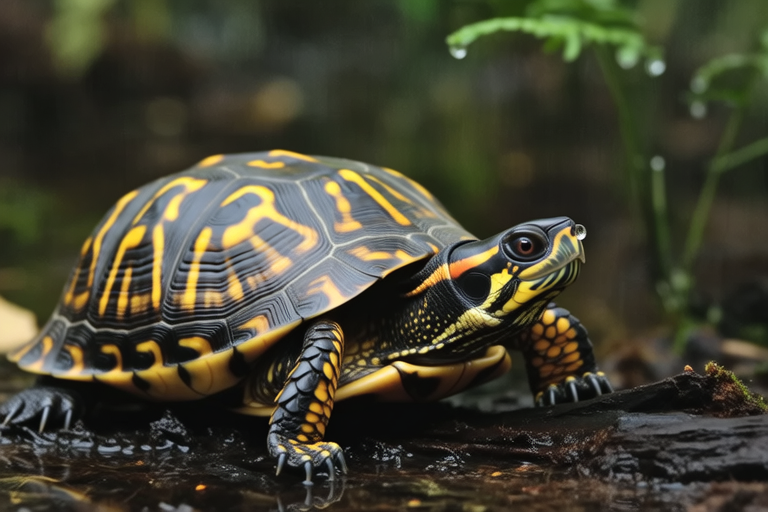
Top 10 Fun Facts About the Colorful and Curious Three-Striped Box Turtle
The three-striped box turtle (Amblyrrhinus phlegmonosus) is a small, captivating creature known for its vibrant colors and distinctive patterns. Native to parts of Asia, these turtles have a rich history and a unique set of traits that make them fascinating to both enthusiasts and casual observers alike. Join us as we explore ten intriguing facts about this colorful and curious reptile.
1. Distinctive Markings
The three-striped box turtle gets its name from the three prominent yellow stripes that run down the length of its dark brown shell. These stripes serve as a natural camouflage, helping the turtle blend into the forest floor where it spends much of its time. Additionally, the bright coloration can act as a warning to potential predators, signaling the turtle’s defensive capabilities. The contrast between the stripes and the shell’s darker hues also makes the species easy to identify in the wild.
2. Habitat Preferences
These turtles are primarily found in Southeast Asia, particularly in countries like Thailand, Myanmar, and Malaysia. They inhabit moist, humid environments such as dense forests, riverbanks, and marshy areas. Their preference for these habitats is due to the availability of food sources and the protection they offer from larger predators. The three-striped box turtle is well-adapted to life on the forest floor, where it can easily find shelter under fallen leaves and among the roots of trees.
3. Diet and Feeding Habits
The diet of the three-striped box turtle consists mainly of insects, worms, fruits, and plants. They are omnivores, which means they eat both plant and animal matter. Insects, such as ants and termites, are a significant part of their protein intake, while fruits and berries provide essential vitamins and minerals. As juveniles, these turtles tend to consume more protein-rich foods, gradually shifting towards a higher intake of plant material as they mature. This dietary flexibility allows them to thrive in various environments with differing food availabilities.
4. Defensive Mechanisms
One of the most remarkable features of the three-striped box turtle is its ability to completely withdraw into its shell when threatened. This behavior is made possible by the hinge-like structure at the bottom of its shell, which allows the turtle to close off its limbs and head. Once inside, the turtle becomes nearly impenetrable to predators. This adaptation has been crucial for the survival of the species, enabling them to protect themselves in the face of threats ranging from birds to larger mammals.
5. Mating Rituals
During the mating season, which typically occurs in spring, male three-striped box turtles become more active and territorial. They engage in elaborate courtship rituals involving head-bobbing and chasing after females. Once a female accepts a male’s advances, mating takes place. Afterward, the female will lay her eggs in a shallow nest she digs in soft soil. The incubation period lasts several weeks, during which the temperature determines the gender of the hatchlings. Warmer temperatures produce more males, while cooler temperatures result in more females.
6. Longevity and Growth
Three-striped box turtles are relatively long-lived creatures, with some individuals living up to 30 years in captivity. In the wild, their lifespan may be slightly shorter due to environmental pressures and predation. Growth rates vary depending on factors such as food availability and climate conditions. Juveniles grow rapidly during their first few years but then slow down as they reach maturity. Their small size, usually around 6 inches in length, allows them to navigate through dense vegetation and seek out suitable nesting sites.
7. Cultural Significance
In many Asian cultures, the three-striped box turtle holds symbolic importance. It is often associated with longevity, wisdom, and good fortune. This cultural significance has led to the turtle being featured in folklore, art, and traditional medicine. However, it is important to note that the use of turtles in traditional remedies has contributed to declines in their populations in certain regions. Conservation efforts are now focusing on raising awareness about the ecological role of these animals and promoting sustainable practices.
8. Threats and Conservation
The three-striped box turtle faces numerous threats in the wild, including habitat loss due to deforestation and urbanization. Additionally, illegal wildlife trade poses a significant risk, as these turtles are sometimes captured for the pet trade or used in traditional medicine. To address these challenges, various organizations are working to protect the species by establishing protected areas, conducting research, and educating local communities about the importance of preserving biodiversity. Efforts are also underway to enforce stricter regulations on the trade of these animals.
9. Adaptations for Survival
Adapted to life in humid, tropical environments, the three-striped box turtle has developed several physiological adaptations that enhance its chances of survival. For example, its skin is highly permeable, allowing it to absorb moisture directly from its surroundings. This is particularly useful in maintaining hydration during dry periods. Furthermore, the turtle’s ability to aestivate—entering a state of dormancy during extreme heat or drought—helps it conserve energy and avoid dehydration. These adaptations demonstrate the resilience of the species in the face of environmental challenges.
10. Myths and Legends
Throughout history, turtles have inspired countless myths and legends across different cultures. One popular tale involves a three-striped box turtle carrying the weight of the world on its back. While this myth does not specifically pertain to this species, it highlights the symbolic importance of turtles in human culture. Another legend suggests that the three stripes on the turtle’s shell represent the path of light, guiding travelers through the darkness. Such stories reflect the deep connection between humans and nature, emphasizing the value placed on these creatures in various societies.
In conclusion, the three-striped box turtle is a remarkable species with a unique combination of physical traits, behaviors, and cultural significance. From its striking appearance to its clever defensive mechanisms, this turtle continues to captivate scientists and nature lovers alike. By understanding and appreciating these fascinating creatures, we can work together to ensure their continued existence in the wild for generations to come.
