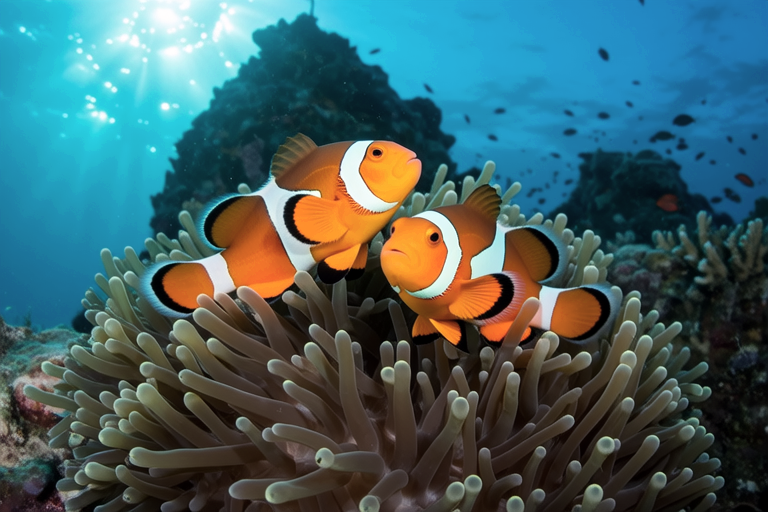
Exploring Clownfish: Behavior, Habitats, and Social Structures
Clownfish, or anemonefish, are some of the most iconic and beloved creatures in the marine world. Their vibrant colors and playful antics have made them popular subjects for aquariums and movies alike. However, beyond their aesthetic appeal, clownfish possess fascinating behaviors, intricate social structures, and a unique symbiotic relationship with sea anemones that have intrigued scientists and nature enthusiasts for decades. This article delves into the lives of these remarkable fish, exploring their habitats, social hierarchies, mating habits, protection mechanisms, and recent scientific discoveries.
Habitats and Symbiotic Relationships
Clownfish inhabit tropical and subtropical coral reefs, where they form a mutualistic relationship with sea anemones. The anemone provides shelter and protection from predators, while the clownfish offer nutrients through their waste products and help to deter butterflyfish, which prey on anemones. This partnership is particularly advantageous for both parties, as it enhances their survival rates.
The symbiosis between clownfish and sea anemones is a prime example of interspecies cooperation. The clownfish’s mucus layer allows them to safely navigate among the anemone’s stinging tentacles, which would otherwise be lethal to other marine life. This adaptation enables clownfish to thrive within the anemone’s protective embrace, making it one of the most secure environments in the ocean.
Social Hierarchies and Mating Habits
Within each anemone, clownfish exhibit a strict social hierarchy. Typically, there is a dominant female at the top, followed by a male, and several subordinate males below them. The dominant pair is responsible for reproduction, while the subordinates assist in caring for the eggs and larvae.
Mating among clownfish involves complex courtship rituals. The dominant female releases eggs onto the anemone’s surface, and the male fertilizes them externally. Afterward, both parents take turns guarding the eggs until they hatch. This cooperative parenting strategy ensures higher survival rates for the offspring.
Interestingly, clownfish can change their sex depending on environmental conditions. If the dominant female dies, the dominant male will transform into a female, ensuring continuity within the group. This remarkable ability allows clownfish populations to adapt quickly to changes in their environment, contributing to their resilience and longevity.
Communication Methods and Daily Routines
Clownfish communicate through a variety of visual, auditory, and chemical signals. They use color patterns, body movements, and fin displays to convey messages to one another. For instance, when threatened, they may flash their fins rapidly or darken their stripes as a warning sign. Additionally, clownfish release pheromones to mark their territory and attract potential mates.
The daily routine of a clownfish revolves around protecting their anemone home and securing food sources. They spend much of their day swimming around the anemone, searching for small invertebrates like zooplankton and algae. At night, they retreat deeper into the anemone for safety, relying on its stinging tentacles to ward off nocturnal predators.
Protection Mechanisms Against Predators
In addition to the protection provided by their anemone hosts, clownfish employ various tactics to evade predators. Their bright colors serve as a warning signal, indicating their toxicity to potential threats. Moreover, clownfish often swim in tight schools, confusing larger predators and making it harder for them to target individuals.
Recent studies have also revealed that clownfish engage in aggressive displays towards potential predators. By puffing up their bodies and darting toward the threat, they can intimidate smaller fish and deter attacks. This behavior, combined with their symbiotic relationship with sea anemones, contributes significantly to their survival in the wild.
Recent Scientific Discoveries
Over the past few years, researchers have uncovered several intriguing aspects of clownfish behavior. One notable discovery is the role of epigenetics in shaping their social structure. Epigenetic modifications influence gene expression, allowing clownfish to adapt their behavior based on environmental cues. For example, stress hormones can trigger changes in gene activity, affecting aggression levels and reproductive success.
Another significant finding concerns the impact of climate change on clownfish populations. Rising ocean temperatures and increased acidity are altering the chemistry of seawater, affecting clownfish larvae development and reducing their chances of survival. Scientists are currently investigating ways to mitigate these effects and preserve clownfish populations for future generations.
Dispelling Common Misconceptions
One prevalent myth about clownfish is that they are immune to the venom of sea anemones. While it is true that clownfish can safely live among anemone tentacles, they are not entirely immune to their sting. Instead, they have developed a specialized mucus layer that neutralizes the toxins, enabling them to coexist with their host.
Another misconception is that all clownfish species look identical. In reality, there are over 30 different species of clownfish, each with distinct color patterns and sizes. Some species, like the percula clownfish, have bold orange and white stripes, while others, such as the maroon clownfish, display more subdued hues.
Conclusion
Clownfish are captivating creatures that offer valuable insights into the complexities of marine ecosystems. Their symbiotic relationships, social hierarchies, and adaptive behaviors make them a subject of ongoing scientific interest. By understanding these aspects of clownfish biology, we can better appreciate the delicate balance of life in our oceans and work towards preserving these vital habitats for future generations.
