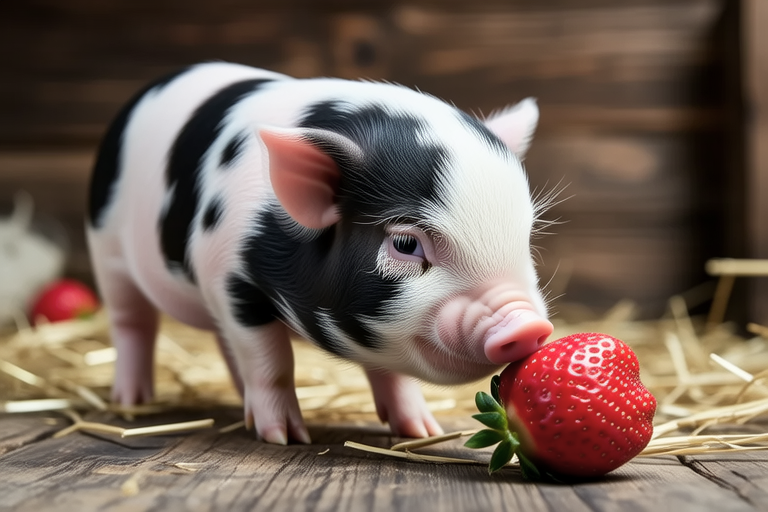
5 Surprising Habits of Guinea Pigs That Will Blow Your Mind
You might think of guinea pigs as quiet, fluffy little creatures who spend their days munching hay and napping in corners. But beneath that soft exterior lies a surprisingly complex animal—full of personality, intelligence, and behaviors that will absolutely blow your mind. These aren’t just adorable pets; they’re social, expressive, and highly attuned to their environment. In fact, research from animal behaviorists and veterinary experts reveals that guinea pigs possess a rich inner world far beyond what most people realize.
From intricate vocalizations to instinctive burrowing habits, these small rodents are anything but simple. If you’ve ever watched your guinea pig twitch its nose or let out a high-pitched squeak, you’ve witnessed the beginning of something much deeper: a sophisticated communication system and survival toolkit honed over thousands of years.
Let’s dive into five surprising habits of guinea pigs that challenge everything you thought you knew—and may just inspire you to see your furry friend in a whole new light.
—
1. They Have a Rich Vocal Communication Repertoire
Guinea pigs don’t just squeak when they’re startled. In reality, they have an extensive “vocabulary” of sounds—over 10 distinct vocalizations identified by researchers at the University of Bristol and other animal behavior labs. Each sound carries specific meaning, making them one of the most vocal small mammals you’ll encounter.
For instance:
– **Wheeking** (a high-pitched trill) is often heard when a guinea pig anticipates food or sees their favorite human. It’s essentially a happy, excited greeting.
– **Purring** happens when they’re content—usually while being petted or snuggled. Think of it as their version of a purr.
– **Chuttering** (a rapid, soft clicking noise) signals mild irritation or curiosity. It’s common when they’re exploring a new object or encountering a new person.
– **Barking** (a sharp, short alarm call) indicates fear or danger. This isn’t just panic—it’s a deliberate warning to other guinea pigs in the group.
One fascinating study published in *Animal Cognition* found that guinea pigs can even distinguish between different types of barks—like those signaling a predator versus a minor threat—showing remarkable cognitive processing.
So next time your guinea pig lets out a “wheek,” don’t just assume it’s hungry. It could be saying, “I’m so excited to see you!” or “I want to play!” Understanding their language strengthens your bond and helps you respond more empathetically to their needs.
—
2. They Form Deep Social Bonds—Even with Humans
Guinea pigs are not solitary animals. In the wild, they live in groups called herds, relying on strong social connections for safety and emotional well-being. This herd mentality carries over into domestic life, where they form deep attachments—not just with fellow guinea pigs, but with their human caregivers too.
Experts at the Royal Veterinary College in London emphasize that guinea pigs exhibit behaviors indicative of genuine attachment. For example:
– They greet familiar humans with enthusiastic head bobbing, tail flicking, and playful circling.
– They seek out physical contact, often nudging against your hand or curling up near your lap during quiet moments.
– When separated from a bonded companion (human or animal), they may become anxious, lose appetite, or display signs of depression-like behavior.
Interestingly, guinea pigs recognize individual human voices and facial expressions. A 2020 study from the University of Lincoln showed that guinea pigs spent more time near owners who spoke in warm, gentle tones—even if those owners weren’t feeding them.
This means your guinea pig isn’t just tolerating your presence; it genuinely enjoys it. Treating them like family—giving them time, attention, and affection—isn’t just kind; it’s essential to their mental health. And yes, they truly miss you when you’re gone.
—
3. Their Dietary Needs Are More Complex Than You Think
Most people know guinea pigs need hay—but few realize how critical it is to their digestive and dental health. Unlike many other rodents, guinea pigs cannot produce their own vitamin C. This makes them uniquely dependent on dietary sources of this essential nutrient.
Here’s the surprising part: without enough vitamin C, guinea pigs can develop scurvy—a painful condition that leads to joint pain, lethargy, poor wound healing, and even death. Symptoms include reluctance to move, loss of appetite, and bleeding gums. Prevention is simple: daily access to fresh, vitamin-rich foods like bell peppers, kale, strawberries, and parsley.
But it’s not just about vitamins. Guinea pigs have continuously growing teeth—like rabbits and chinchillas—that require constant wear to prevent overgrowth. Overgrown teeth can cause severe pain, difficulty eating, drooling, and weight loss.
That’s why hay isn’t just a treat—it’s a necessity. Timothy hay should make up 80% of their diet, providing both fiber and natural tooth grinding. Pellets should be limited to a tablespoon per day, and fresh veggies introduced gradually to avoid digestive upset.
Veterinarians stress that a guinea pig’s diet must be carefully balanced. One study from the Journal of Exotic Pet Medicine found that improper nutrition was the leading cause of illness in pet guinea pigs—often due to owner misconceptions about treats and snacks.
So the next time you reach for a handful of seeds or dried fruit, remember: your guinea pig doesn’t need a sugary snack. It needs hay, fresh greens, and a steady supply of vitamin C. Think of it as giving them a daily wellness check—without the doctor’s visit.
—
4. They’re Nocturnal Alertness Experts—Even During the Day
While guinea pigs are technically crepuscular (most active at dawn and dusk), they remain highly alert throughout the day and night—thanks to their evolved survival instincts.
Their eyes are positioned on the sides of their heads, giving them nearly 360-degree vision. This allows them to detect movement and predators from almost any angle—something crucial in the wild, where they were prey for birds of prey, snakes, and foxes.
But here’s the real surprise: guinea pigs sleep in short bursts—typically 10 to 15 minutes at a time—throughout the day and night. They never fully “shut down.” Instead, they remain in a state of low-level vigilance, constantly scanning their surroundings.
This explains why your guinea pig might suddenly freeze mid-nap at the sound of a door closing or a loud noise. It’s not just being jumpy—it’s responding to potential threats with instinctive caution.
In captivity, this trait can sometimes lead to stress if their environment is too noisy or unpredictable. Experts recommend placing their cage in a quiet, low-traffic area, away from TVs, loud music, or sudden movements.
Yet paradoxically, this hyper-awareness also makes them excellent companions. They notice subtle changes in your mood—your sighs, your voice tone, even your body language. A calm, consistent routine helps them feel safe and reduces anxiety.
So when your guinea pig seems “always awake,” it’s not because they’re hyperactive. It’s because they’re wired to stay alert—to protect themselves, and now, to protect their bond with you.
—
5. They Instinctively Dig and Burrow—Even in Small Spaces
You’ve probably seen your guinea pig digging through bedding or pushing toys aside. What you might not know is that this isn’t random behavior—it’s a deeply ingrained instinct rooted in their evolutionary past.
In the wild, guinea pigs lived in burrows created by other animals or dug into grasslands. These underground homes provided shelter from predators, extreme weather, and temperature swings. Even today, their natural urge to dig remains strong.
But here’s the kicker: guinea pigs don’t just dig—they build elaborate nests. They use their front paws and teeth to rearrange bedding, creating cozy tunnels and hiding spots. Some even carry pieces of hay or fabric to reinforce their “dens.”
This behavior is especially common in females preparing for motherhood. However, even non-breeding guinea pigs engage in digging as a way to express comfort, reduce stress, and assert control over their space.
Many owners mistakenly believe that digging is destructive. But in truth, it’s a sign of mental enrichment. A guinea pig denied the opportunity to dig may develop behavioral issues like chewing cage bars, pacing, or aggression.
The solution? Provide a dedicated digging zone. Use a large plastic tub filled with safe materials like shredded paper, recycled cardboard, or specially designed guinea pig bedding. Add tunnels, hideouts, and chew toys to encourage exploration.
Animal behaviorist Dr. Carolynn Smith notes that “allowing guinea pigs to dig is not just a fun activity—it’s a vital part of their psychological wellbeing.” By fulfilling this instinct, you’re not just keeping them busy; you’re honoring their natural identity.
—
The Takeaway: Guinea Pigs Are Smarter Than You Think
When you look at these five surprising habits—their complex vocalizations, deep social bonds, precise dietary needs, constant vigilance, and instinctive burrowing—you start to see a picture of an intelligent, emotionally aware creature.
Guinea pigs aren’t just cute pets. They’re sensitive, communicative, and highly adaptive animals with rich inner lives. They form bonds, experience joy and fear, and rely on routines, environments, and relationships to thrive.
By understanding these habits, you’re not just being a better pet owner—you’re becoming a true partner in their world. You’re learning to listen to their sounds, respect their space, nourish their bodies, and honor their instincts.
So the next time your guinea pig wiggles its nose at you, gives a soft wheek, or tucks itself into a corner with a pile of hay, pause for a moment. That tiny creature is expressing something profound—affection, comfort, curiosity, or simply the joy of being alive.
Appreciate them not just for their size or cuteness—but for their depth, resilience, and quiet wisdom.
Because in the end, guinea pigs aren’t just pets. They’re friends. And sometimes, they’re the ones teaching us how to live with more awareness, care, and connection.
—
Happy guinea pig parenting!
