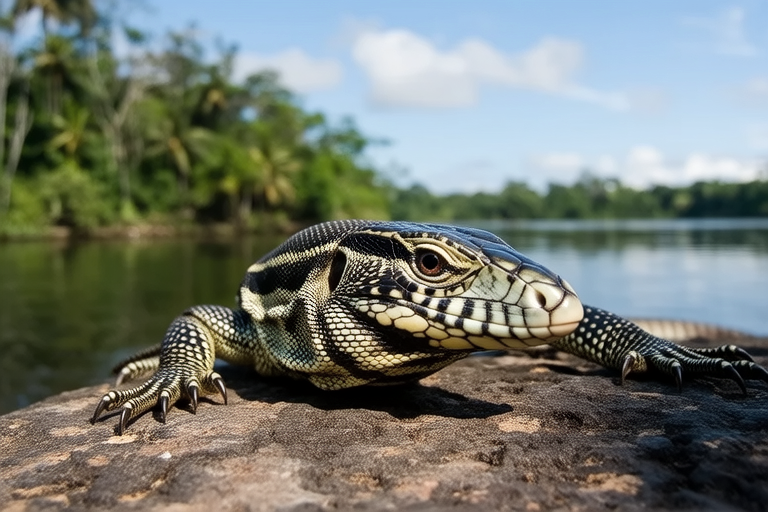
Top 10 Fascinating Facts About Water Monitors That Will Leave You in Awe
Introduction:
Water monitors (Varanus salvator) are some of the most impressive reptiles on Earth, known for their remarkable size, agility, and adaptability. These large lizards can be found across Southeast Asia, from India to Indonesia. They thrive in both aquatic and terrestrial environments, making them one of nature’s most versatile predators. In this article, we explore ten fascinating facts about water monitors that will leave you in awe of their unique abilities and behaviors.
Fact 1: The Largest Lizard in the World
The water monitor is the second-largest lizard species after the Komodo dragon. Adult males can reach lengths of up to 3 meters (9.8 feet), weighing around 22 kg (49 lbs). Their elongated bodies are covered in scales that provide excellent protection against predators. The tail alone can account for about two-thirds of their total length, serving as both a powerful weapon and a means of propulsion in water. This impressive size allows them to dominate their habitats, preying on a wide range of animals including fish, birds, small mammals, and even other reptiles.
Fact 2: Exceptional Swimmers
Water monitors are adept swimmers, spending significant time in rivers, lakes, and coastal waters. They have webbed feet that help them paddle efficiently through the water, while their long tails act like powerful rudders. These lizards can dive up to depths of 4.5 meters (15 feet) and stay submerged for up to 30 minutes, thanks to their ability to slow down their heart rate and conserve oxygen. This adaptation enables them to hunt underwater, where they prey on fish and crustaceans. Their streamlined bodies and strong limbs make them efficient swimmers, allowing them to cover vast distances in search of food or mates.
Fact 3: Diverse Diet
Water monitors are opportunistic feeders, meaning they eat whatever is available in their environment. Their diet includes insects, frogs, fish, crabs, birds, eggs, and even carrion. They use their sharp teeth and powerful jaws to crush hard-shelled prey like snails and turtles. In addition to hunting live animals, water monitors also scavenge for dead ones, making them important members of their ecosystems. This dietary flexibility has contributed to their success as a species, allowing them to survive in various habitats.
Fact 4: Keen Senses
Water monitors possess highly developed senses that aid in hunting and survival. They have excellent eyesight, which helps them spot potential prey from a distance. Their sense of smell is particularly acute, allowing them to detect food even when it’s buried underground or underwater. This is facilitated by a forked tongue that collects scent particles from the air or water and transfers them to a specialized organ called the Jacobson’s organ located at the roof of their mouth. This combination of sensory abilities makes them formidable hunters.
Fact 5: Unique Defensive Mechanisms
When threatened, water monitors employ several defensive strategies. One of their most effective defenses is their powerful bite, capable of delivering deep puncture wounds. They may also lash out with their whip-like tails, which can be used to strike attackers or create a loud noise to deter them. In addition, water monitors can release a foul-smelling musk from glands near their cloaca, a tactic commonly used by skunks but rarely seen in reptiles. These defenses, combined with their size and strength, make water monitors formidable opponents for most predators.
Fact 6: Habitat Adaptation
Water monitors inhabit diverse environments ranging from dense forests to mangrove swamps and open grasslands. They are equally comfortable in freshwater and saltwater habitats, which explains their widespread distribution across Southeast Asia. Their ability to thrive in such varied conditions is due to their physiological adaptations, such as efficient thermoregulation and the capacity to tolerate different levels of salinity. This versatility ensures that water monitors can exploit multiple niches within their ecosystem, contributing to their ecological success.
Fact 7: Reproduction and Lifespan
Water monitors reproduce annually, with females laying clutches of up to 40 eggs in burrows or termite mounds. After an incubation period of approximately 6 months, the hatchlings emerge fully formed and ready to fend for themselves. Despite being relatively small at birth, they grow rapidly under optimal conditions. With proper care and favorable environmental factors, water monitors can live up to 20 years in captivity. In the wild, however, their lifespan may be shorter due to predation and environmental pressures.
Fact 8: Social Behavior
Contrary to popular belief, water monitors are not solitary creatures. While they spend much of their time alone, they do interact socially during mating season and sometimes form loose groups around abundant food sources. Males compete aggressively for access to females, engaging in physical confrontations that involve biting and tail whipping. Females may mate with multiple partners over a short period, increasing genetic diversity within the population. After mating, males disperse, leaving the females to incubate and protect the eggs.
Fact 9: Role in Ecosystems
Water monitors play crucial roles in maintaining balance within their ecosystems. As apex predators, they control populations of smaller animals, preventing any single species from becoming too dominant. By consuming carrion, they help recycle nutrients back into the environment. Additionally, their digging behavior aids in soil aeration and seed dispersal. These activities contribute to overall biodiversity and ecosystem health, highlighting the importance of conserving water monitors.
Fact 10: Conservation Challenges
Despite their resilience and adaptability, water monitors face numerous threats in today’s world. Habitat destruction caused by deforestation and urbanization reduces available space for these lizards to live and hunt. Overharvesting for the exotic pet trade and traditional medicine markets further depletes wild populations. Climate change poses additional risks, altering weather patterns and affecting water availability. Addressing these challenges requires concerted efforts from governments, conservation organizations, and local communities to ensure the survival of water monitors.
Conclusion:
Water monitors are truly remarkable creatures, showcasing incredible physical characteristics, behaviors, and adaptations that have allowed them to thrive across Southeast Asia. From their exceptional swimming skills to their diverse diets and keen senses, these lizards demonstrate remarkable versatility and intelligence. However, as human activities continue to impact their natural habitats, it becomes increasingly important to prioritize conservation efforts aimed at protecting water monitors and preserving their vital role in ecosystems. By raising awareness and supporting initiatives dedicated to wildlife protection, we can help ensure that future generations will have the opportunity to marvel at these magnificent animals.
