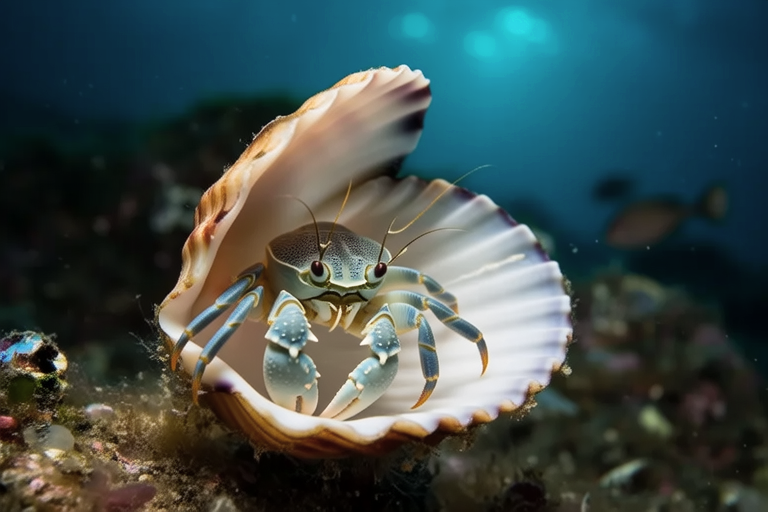
Pea Crab Adventures: Tiny Hitchhikers in Marine Mollusks
In the vast ocean, where countless species coexist in intricate relationships, one fascinating partnership stands out: the symbiotic relationship between pea crabs and marine mollusks. These tiny crustaceans, barely larger than a fingernail, have evolved to live within the protective shells of their mollusk hosts, creating a mutually beneficial arrangement that has intrigued scientists and nature enthusiasts alike. This article delves into the world of pea crabs, exploring the species involved, the benefits and challenges of this relationship, the lifecycle stages of pea crabs within their hosts, and the unique adaptations that make this partnership possible.
The Species Involved
Pea crabs belong to the family Pinnotheridae, which comprises over 100 species distributed across the globe. The most common genera include Pinnixa, Pinnotheres, and Uca. While many pea crab species inhabit various marine environments, they all share a remarkable trait: the ability to live within the mantle cavity of their mollusk hosts. These hosts can be bivalves such as clams, oysters, and scallops, as well as sea cucumbers and even some echinoderms.
One of the most well-known pea crab species is Pinnixa faba, commonly found in the North Atlantic. This small, translucent crab measures only about half an inch in length and is often referred to as the “bean crab” due to its shape. Another notable species is Pinnotheres pisum, which resides within the shells of European oysters. These crabs are not only remarkable for their size but also for their ability to thrive in diverse aquatic ecosystems.
A Symbiotic Partnership
The relationship between pea crabs and their mollusk hosts is best described as commensalism, where one species benefits while the other remains unaffected. For the pea crabs, living inside their hosts offers protection from predators and a reliable food source. The host mollusks, in turn, may benefit from the presence of pea crabs by receiving cleaner shells or enhanced reproductive success.
Inside the host’s shell, pea crabs feast on plankton and detritus filtered by the mollusk’s gills. This feeding strategy allows the crabs to conserve energy and avoid competition with larger predators outside the shell. Additionally, pea crabs help clean the inside of the shell, removing debris and preventing harmful bacteria from accumulating. In some cases, the presence of pea crabs may even enhance the reproductive success of their hosts by reducing parasitic infections.
Benefits and Challenges
For the pea crabs, the primary advantage of this partnership is safety. By residing within the protective shell of their host, they are shielded from external threats, including larger fish and predatory crustaceans. Moreover, the constant supply of food ensures their survival, especially during periods of low prey availability. However, this lifestyle comes with its own set of challenges. The cramped space inside the host’s shell limits the crab’s growth and mobility, making it essential for them to adapt to these constraints.
For the mollusks, hosting pea crabs can offer several benefits. As mentioned earlier, pea crabs assist in keeping the interior of the shell clean, which can improve the overall health of the host. Some studies suggest that the presence of pea crabs may also reduce the risk of parasitic infections, thereby enhancing the host’s reproductive success. Despite these advantages, hosting pea crabs can also pose certain risks. For instance, if the population of pea crabs grows too large, it could lead to increased competition for resources, potentially harming the host.
The Lifecycle Stages of Pea Crabs
The lifecycle of pea crabs begins when the female lays her eggs on the gills or mantle cavity of the host mollusk. After hatching, the larvae, known as zoeae, enter the water column and undergo several molts before reaching the megalopa stage. During this stage, the larvae search for a suitable host, often using chemical cues released by the host to locate it. Once a host is found, the megalopa enters the shell through the siphon or other openings, marking the beginning of its adult life.
Inside the host, the pea crab continues to molt, gradually increasing in size until it reaches adulthood. Male and female pea crabs typically pair up within the same host, and mating occurs inside the shell. After fertilization, the female carries the eggs on her abdomen until they hatch. This cycle repeats itself, ensuring the continuation of the species.
Unique Adaptations
To thrive within their hosts, pea crabs have developed several unique adaptations. One of the most striking features is their flattened body shape, which allows them to fit snugly within the narrow confines of the host’s shell. Their transparent exoskeleton provides camouflage, blending seamlessly with the host’s tissues. Additionally, pea crabs possess specialized appendages called chelipeds, which they use to grasp onto the host’s gills and prevent themselves from being washed away by water currents.
Another remarkable adaptation is the pea crab’s ability to regulate its metabolism to match the activity level of the host. When the host is stationary, the pea crab slows down its metabolic rate, conserving energy. Conversely, when the host moves or filters water, the crab increases its activity, taking advantage of the increased flow of food particles.
Interesting Facts and Anecdotes
One of the most intriguing aspects of pea crabs is their ability to change color to match the appearance of their host. This camouflage helps them blend in, reducing the likelihood of detection by predators. Scientists have observed that pea crabs can adjust their coloration within minutes of entering a new host, showcasing their remarkable adaptability.
There are also stories of fishermen finding pea crabs inside the shells of commercially harvested mollusks. One such anecdote involves a fisherman who opened an oyster only to find a tiny crab scurrying away. Surprised by the discovery, he shared the story with fellow fishermen, sparking curiosity about these hidden hitchhikers. Such encounters highlight the hidden world of marine symbiosis and remind us of the complexity of underwater ecosystems.
Conclusion
The symbiotic relationship between pea crabs and their mollusk hosts is a testament to the wonders of evolution and the intricate balance of marine ecosystems. Through this partnership, pea crabs gain protection and a reliable food source, while their hosts benefit from cleaner shells and reduced parasitic infections. The unique adaptations of pea crabs, such as their flattened bodies and color-changing abilities, further underscore the ingenuity of nature. As we continue to explore the ocean’s depths, we uncover more fascinating stories like that of the pea crabs, reminding us of the importance of preserving these delicate relationships for future generations.
