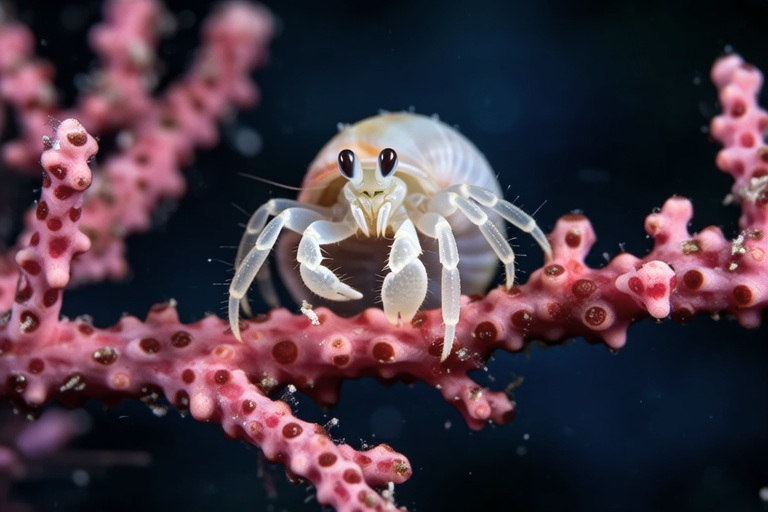
Microscopic Marvels: Discovering the World’s Smallest Crab Hosts
In the vast ocean, where creatures of all sizes thrive, there exists a group of crustaceans that stand out for their diminutive stature. These are the smallest crabs in the world, often referred to as “microcrabs,” which have captured the attention of scientists and nature enthusiasts alike. This article delves into the unique characteristics, habitats, and behaviors of these tiny marvels, shedding light on their evolutionary adaptations, ecological roles, and the challenges researchers face when studying them.
The Tiniest Crustaceans
Microcrabs are among the smallest arthropods in the animal kingdom. Some species measure less than a millimeter in length, making them barely visible to the naked eye. Their small size is a result of evolutionary adaptations that have allowed them to thrive in specific niches within marine ecosystems. Despite their petite dimensions, these crabs possess all the necessary features of their larger counterparts, including a hard exoskeleton, jointed legs, and specialized appendages for feeding and defense.
Habitats and Adaptations
These microcrabs can be found in various aquatic environments, from shallow coastal waters to deep-sea hydrothermal vents. Each habitat presents its own set of challenges and opportunities, prompting the development of unique adaptations. For instance, some species live symbiotically with other organisms, such as sponges or corals, providing them with protection in exchange for food and shelter. Others are free-living, scavenging for detritus or preying on even smaller organisms.
One of the most remarkable adaptations of microcrabs is their ability to survive in extreme conditions. Some species have been found thriving near hydrothermal vents, where temperatures can reach over 300 degrees Celsius. These crabs have evolved heat-resistant proteins and enzymes that allow them to withstand the intense heat and toxic chemicals emitted by the vents. Similarly, those living in deep-sea environments have adapted to the high pressure and low light levels, developing bioluminescent organs to attract prey or communicate with potential mates.
Behavioral Traits
The behavior of microcrabs is as fascinating as their physical adaptations. Many species exhibit complex social structures, forming colonies or aggregating in large numbers. They communicate through chemical signals, touch, and sometimes even sound, although the latter is less common due to the limitations imposed by their size. Their movements are often coordinated, allowing them to efficiently exploit resources and avoid predators.
Feeding habits vary widely among different species. Some are omnivorous, consuming both plant and animal matter, while others are more specialized, focusing on specific types of food sources. For example, certain microcrabs are known to feed on the mucus secreted by other marine organisms, a behavior that has earned them the nickname “mucus-eaters.” This unique diet allows them to thrive in environments where traditional food sources might be scarce.
Ecological Roles
Despite their small size, microcrabs play crucial roles in their respective ecosystems. They act as decomposers, breaking down organic matter and recycling nutrients back into the environment. This process is essential for maintaining the health and balance of marine ecosystems, as it helps prevent the accumulation of waste and promotes the growth of new life forms.
Moreover, microcrabs serve as a vital link in the food chain, serving as prey for larger organisms. By controlling the populations of their prey, they help maintain the balance of predator-prey relationships, ensuring the stability of entire ecosystems. In some cases, they also act as bioindicators, reflecting changes in environmental conditions. As such, monitoring the health and abundance of microcrab populations can provide valuable insights into the overall state of marine ecosystems.
Challenges in Research
Studying microcrabs presents several challenges for researchers. Due to their small size, observing and collecting specimens requires specialized equipment, such as microscopes and fine-tipped tweezers. Additionally, many species are elusive and difficult to locate, necessitating extensive sampling efforts and patience.
Another challenge is understanding the complex interactions between microcrabs and their environment. Because they often live in symbiotic relationships with other organisms, researchers must consider the broader ecosystem when studying these tiny creatures. This requires interdisciplinary collaboration and advanced analytical techniques to unravel the intricate web of dependencies and interactions.
Fascinating Discoveries
Recent research has uncovered several intriguing aspects of microcrab biology. One of the most significant findings is the discovery of new species, expanding our understanding of the diversity and distribution of these creatures. For example, a 2019 study identified a previously unknown genus of microcrabs in the Caribbean Sea, highlighting the ongoing need for exploration and documentation.
Researchers have also gained insights into the reproductive strategies of microcrabs. Some species produce large numbers of eggs, relying on sheer volume to ensure the survival of at least some offspring. Others invest more heavily in parental care, protecting their eggs and hatchlings until they are better equipped to fend for themselves. Understanding these strategies can provide valuable information about the evolutionary pressures shaping microcrab populations.
Conclusion
The world of microcrabs is a testament to the incredible diversity and adaptability of life on Earth. These tiny crustaceans, with their unique characteristics, habitats, and behaviors, offer a window into the hidden worlds of marine ecosystems. While much remains to be discovered, ongoing research promises to reveal even more about these microscopic marvels, enriching our understanding of the natural world and inspiring new avenues of scientific inquiry.
